
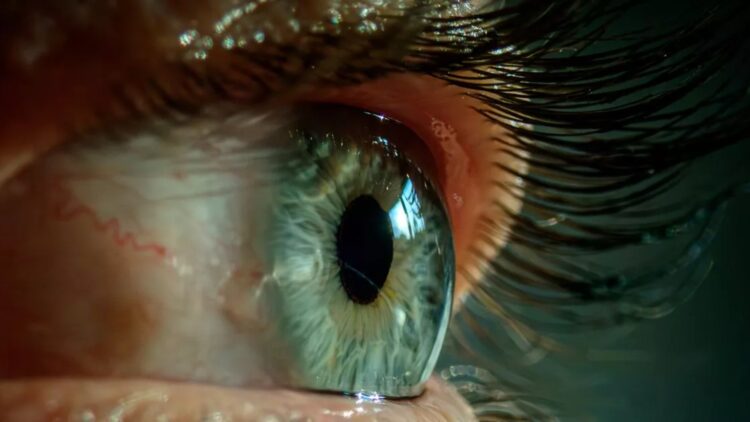
What’s the relationship between your eyes and memory? Thanks to sight you can see everything around you: colors, shapes, people’s faces, and even the words you’re reading right now. But did you know your eyes can also reveal a lot about your brain? A new study has shown that changes in the eyes can actually predict dementia up to 12 years before doctors diagnose it. This could have a huge positive impact for so many people. So, let’s take a closer look at this study.
The study
Scientists in England followed 8,623 healthy people for many years. At the beginning, everyone took a visual test: They had to press a button as soon as they saw a triangle appear in a field of moving dots.
The results were surprising because the people who later developed dementia were slower to notice the triangle than the people who stayed healthy. This means the eyes were showing brain changes long before memory problems appeared.
Why the eyes can predict dementia
Researchers believe the eyes are a window into the brain. In Alzheimer’s disease, some of the first brain areas damaged are the ones connected to vision. That’s why problems with the eyes often show up before memory loss. So, by testing the eyes, doctors may be able to detect dementia much earlier.
Warning signs in the eyes
Here are some vision problems that may appear in the early stages of dementia:
- Trouble seeing the edges or outlines of objects.
- Difficulty telling certain colors apart, especially in the blue-green range.
- Problems controlling eye movements, because it’s harder to ignore distractions.
These eye issues can even raise the risk of car accidents, since people with dementia may be more easily distracted while driving.
The eyes and recognizing faces
Another early sign of dementia is how people use their eyes when meeting someone new. Healthy people scan a face with their eyes in a pattern: eyes → nose → mouth. This helps the brain “record” the face for memory. However, people with dementia don’t move their eyes in this way, so they may not recognize the same person later.
Doctors sometimes notice dementia just by watching how patients use their eyes because they often seem “lost” since they don’t use their eyes to scan their surroundings or faces normally.
Can the eyes improve memory?
Not everything is bad news. Some studies suggest that moving the eyes can actually help memory, for example:
- Reading books or watching TV keeps the eyes moving a lot, which may keep the brain active.
- Quick eye movements from left to right (about twice per second) have been shown to improve people’s autobiographical memory (their life story).
Some research even suggests this benefit of eye movement works better for right-handed people than for left-handed people, though no one knows why yet.
The technology challenge
Even though the eyes can give important information, doctors don’t often use them for dementia tests yet. The problem is that eye-tracking machines are expensive and require special training. Scientists believe that when eye-tracking becomes cheaper and easier, testing the eyes could be one of the best ways to catch Alzheimer’s disease early.
So, your eyes do much more than just help you see the world. They can also give doctors important clues about the health of your brain, even many years before memory problems begin. Scientists now know that changes in the eyes can predict dementia up to 12 years in advance.
Now that you know this, you are more aware of how important it is to care for your eyes and pay attention to how they work. They might reveal much more than you ever imagined.