
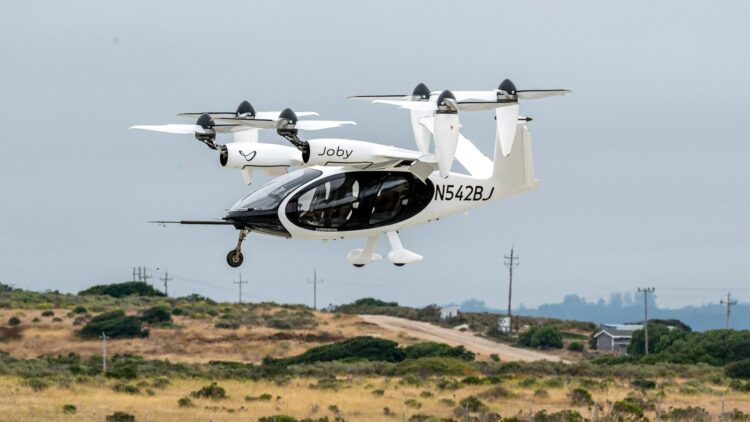
Flying taxis. Yes, they’re already real, and no, they’re not from Tesla. They’re Chinese, and they’ve marked a turning point in the history of urban mobility. The world’s first flying (and autonomous, Musk!) taxis. Developed by EHang, the first flight demonstrations of the EH216 eVTOL model have already taken place… and successfully (not like in Austin…)!!
They look like something out of a sci-fi series, but this is progress, cutting-edge technology, sustainability, and autonomy, a perfect combination that went viral within minutes. No wonder. Had we ever really dreamed of flying vehicles? Well, now it’s a reality!
How did they manage to make cars fly?
Very simple, with official authorization from the Civil Aviation Administration of China and the right technologies…
These electric vertical take-off and landing vehicles have started lifting off in controlled environments, of course, little by little. It hasn’t been confirmed yet which cities will see them in commercial operation, but one thing’s clear: the future is already flying, and it’s happening in a country determined to lead innovation!
EHang and the EH216: this is how the taxi of the future works
The EHang EH216 is a fully autonomous aerial vehicle, meaning it doesn’t need a human pilot. It can carry two passengers at a speed of up to 130 kilometers per hour, with a flight autonomy of 21 minutes or 35 kilometers. It’s probably the best alternative for getting around between different points in China’s megacities!
What does it look like?
Exactly how you always imagined. A cabin with two propellers that takes you flying through the city, with no one behind the wheel, or the controls, whatever. Just you and whoever’s with you, flying.
And yes, it offers stable and silent flights, panoramic views, and an experience that we can already tell you will be unforgettable.
Fast charging and low environmental impact
One of the big challenges with these types of vehicles was how to recharge them without spending half the day plugged in. But EHang has solved that pretty well. In just two hours, the EH216 is back to 100%, thanks to a smart charging system that communicates with the BMS (the battery management system) and optimizes the entire process.
Since it runs only on electric power, the environmental impact is very low. Another big plus in cities where pollution is already a chronic issue.
How much does it cost to ride the future?
Let’s talk about money…
For now, it’s not for every budget. Each EH216 costs about 2.39 million yuan, which is roughly 300,000 dollars. Not exactly cheap, but that’s how it goes with almost any technology in its early stages.
At the moment, the vehicle only carries two passengers, but the idea is that as more units are produced and the project scales up, costs will drop and larger models will come along. In other words, it won’t just be a futuristic luxury, but something more common in urban mobility.
What if the next stop is your city?
China’s technological breakthrough with flying taxis hasn’t gone unnoticed anywhere in the world. The buzz on social media is loud and clear, and countries like the United Arab Emirates (UAE) are already eyeing it and want to develop similar technologies!
Is a new tech race starting?
Of course! Or do we really think Tesla is going to sit still? No! The race to lead global technology is already a reality and already has a frontrunner: China!
It’s no longer just a movie scene or a futuristic sketch from art class. It’s real and already flying. Not for everyone, but for now! Autonomous, sustainable, and efficient technology that wants to change the world!