
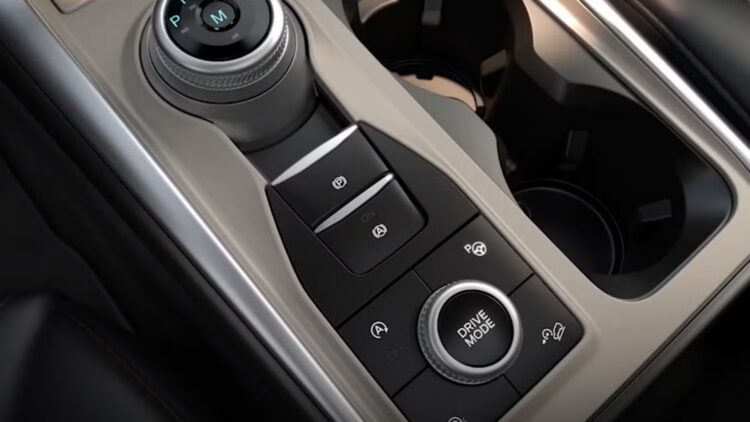
The automotive world does not stand still for a single day, and more and more technological adjustments are coming with our cars, but Ford is doing something different. They are clear about where they want to go, and they have decided to eliminate one of the features that seemed like it was going to be the biggest novelty, but that nobody uses. We are talking about Active Park Assist, a system that allowed vehicles to park by themselves (for many clumsy drivers it was the solution…).
Yes, the one that turns the steering wheel for you while you simply watch. Well, after more than ten years in some models, Ford has said no more. And it is not because of failures or safety issues, but, as we said, because most drivers do not use it. After analyzing data from their connected vehicles, the brand concluded that maintaining this system cost money (a lot), and the reality is that it did not provide any return.
Why is Ford changing this system?
Active Park Assist arrived in 2009 and it was a real revolution. Your car detected a parking space and parked itself (both parallel and perpendicular). You only controlled the brake and the accelerator, very simple, and we are sure it saved more than one side mirror.
However, even though it was a “boom”, this function was used a couple of times and then no more. That is what Ford’s internal data estimates. Drivers prefer to park on their own, because it is faster, out of habit, or because they do not trust the system.
The definitive savings
With the data on the table, it is clear that if the system is not used, it makes no sense to keep implementing it in cars, because maintaining it costs 60 dollars per vehicle (which can amount to up to 10 million dollars a year!!!). And now that Ford is dealing with several recalls, financial pressure and very strong competition, every saving counts.
So Ford has to think about which technologies it wants to continue implementing in its vehicles, and it is clear that Active Park Assist will not be one of them.
Fewer buttons, fewer functions…
Modern cars come loaded with assistants, screens, menus and a lot of features to help us, but the reality is that many of them go out of fashion a few weeks after buying the car. And this one, specifically, was absurd to keep.
Parking manually was much faster than waiting for the system to detect the space and start the maneuver…
Are changes coming?
Yes, for the entire industry. Perhaps other brands will also start eliminating little used features to reduce costs, simplify driving and make vehicles a bit more affordable.
Models that still keep this feature
For now, some models like the F-150 Lightning or the 2025 Explorer still keep the system, but it is believed that they will also disappear in future updates.
This is not necessarily a final goodbye. Perhaps in the future they will bring it back (or something similar), but only if it provides a real benefit.
The future of Ford
Eliminating this system (and others that are also underused) will allow Ford to have resources to invest in other areas, such as electric vehicles and range improvements. So it is a necessary change that may open another chapter in the history of this great brand.
Not all innovation deserves to stay forever, and Ford is betting on more useful and less “decorative” technology, more aligned with how people actually use their cars.
Are we at the beginning of a simpler car?
Who knows. We will have to see how this decision develops beyond a single feature. It reflects a change in mindset in an industry that for years has added technology almost by inertia, without asking whether anyone really needed it. Now the question is whether we want cars full of features we do not use, or simpler, more efficient and more affordable vehicles. Perhaps we already know the answer.