
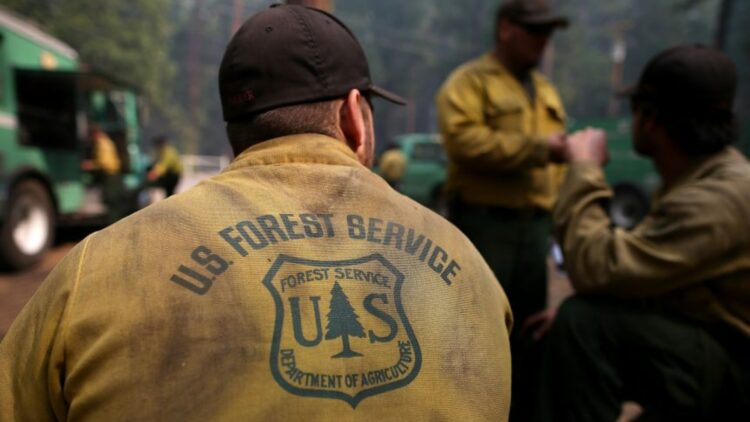
The Department of Agriculture has taken the first step in one of its biggest transformations in years: the Forest Service is saying goodbye to its nine regional offices. This was announced by Secretary Brooke Rollins in a recent memo, in which she justified the move as part of a strategy to decentralize the system, gain efficiency and, in her words, “restore the department’s core mission”. Wait, what?!
What sounds like modernization on paper has, in practice, left many inside and outside the Forest Service scratching their heads. Because eliminating the entire regional structure that has been operating for decades, and doing so right in the middle of peak fire season, is not exactly a normal decision to make.

Now who supervises who?
According to the plan, the functions that used to be spread across nine regions will be grouped into five new centers: Raleigh, Kansas City, Indianapolis, Fort Collins and Salt Lake City. The idea is to reduce the presence in Washington, D.C. to about 2,000 employees, down from the current 4,600.
But of course, that means moving or eliminating a lot of people. Just the DOGE (the Department of Government Efficiency, yes, that’s really its name) has already laid off about 3,400 employees, mostly those on probation or in departments linked to diversity, equity or inclusion. On top of that, more than 15,000 workers have opted for a “deferred resignation”.
Modernization or dismantling?
Dale Bosworth, who was Forest Service chief under the Bush administration, has made it clear: he sees no logic in having 120 national forests and their respective administrative units report directly to the national chief. “I don’t see how this can work”, he said in an interview with Mountain Journal. And many people agree.
Because this isn’t a private company. We’re talking about an agency that manages 193 million acres of public land, with hierarchical structures that go from regional headquarters to local ranger offices that need room to act quickly and effectively. And that, on top of that, have been dealing with tight budgets and increasingly smaller staff for years.
Scientific research is also at risk
Although the National Fire Science Laboratory and the Forest Products Lab in Missoula will remain as they are, seven other research stations will be absorbed by Fort Collins. This breaks ties with local universities that, until now, were key in training new specialists and collaborating on scientific projects.
Jim Burchfield, former dean of the College of Forestry at the University of Montana, was quite clear: this reorganization “does not pass the ultimate test of validity”. In his opinion, if the goal is truly to improve forest management, the one thing you don’t do is tear down what was already working reasonably well.
Fewer wildfire staff than in the 60s
The USDA says the impact on wildfire response will be “minimal”. They even claim to have exceeded their hiring goals. But neither firefighters nor outside observers fully believe that.
In fact, the current Forest Service chief, Tom Schultz, admitted in June that he is trying to bring back about 1,400 workers with “red cards” meaning they have specific training to fight fires. And Bosworth sums it up well: today there’s less staff than in the 1960s, but way more people visiting forests and a much higher fire risk due to climate change and urban expansion. “I don’t see how this is going to improve the situation” he said.
A political move with practical consequences?
The administration insists this isn’t a massive downsizing, but a reorganization to get things done better. But it’s hard to ignore the political background, especially with diversity offices in the spotlight and an execution that seems to be moving faster than there’s time to assess.
For now, the only sure thing is that the Forest Service is going to change completely. And the consequences of this decision (good or bad) won’t show up in a press release, but out in the field. Where fires are put out, ecosystems are taken care of, and decisions are made in real time about whether a forest is saved or not.