
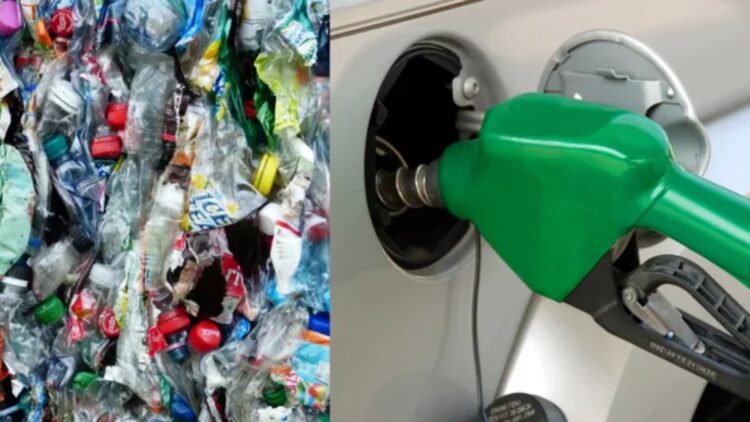
In the last couple of years, the search for new ways of obtaining fuel has increased a lot. This is due to the amount of people who want solutions that are cheaper, more sustainable, and less dependent on traditional oil. In this context, a new idea has gone viral on social media: the possibility of making gasoline using plastic and solar energy, all of this from the comfort of your home!
The idea was shared by an American businessman and content creator called Julian Brown, known as NatureJob on the internet. In his videos, he shows how he transforms plastic waste into a liquid and he confirms it can work as fuel for engines.
This might seem like an easy, affordable, and eco-friendly process; but this may not be as good, new, and practical as he says. So, let’s learn more about this viral trick and why it’s not as good as it’s said.
What Brown shwoes on social media
The process this content creator shares starts with shredding plastic into small pieces to then put them in a closed recipient that works as a kind of oven or capsule. Inside this oven, the plastic experiences very high temperatures due to a process called pyrolysis.
Pyrolysis means heating materials without oxygen to decompose them. When the plastic starts heating, it releases vapors which will cool to become a liquid. And the color of this liquid is very dark, almost like Coca-Cola.
After that, this liquid is transferred into a large distillation system (similar to a traditional alcohol still). There, it is refined until it reaches a level similar to gasoline fuel.
Brown also highlights that the entire setup is powered by solar panels, which makes the system appear environmentally friendly.
Fuel from plastic
This process is not something new, large petrochemical companies have researched producing fuel from plastic for many years. However, what’s new is the way in which this content creator presents it, as if it were something simple that anybody can do anywhere.
Even though the concept is based on something real, the homemade version it’s not practical nor safe.
Why you shouldn’t do it
We know this idea might seem very appealing, but there are 3 main issues about this process:
- It requires very high temperatures: To decompose plastic and make it release vapors, the oven must reach 200ºC or more; which requires a huge amount of electricity. So, this makes the process not energy-efficient.
- The fuel quality is not reliable: in case you succeed in producing a liquid fuel, there are some facts that make the process not efficient and not practical like: its quality can vary greatly, it is not guaranteed to work safely in engines, and it can damage motors or produce dangerous emissions.
- It’s dangerous: the combination of extreme heat, flammable vapors, sudden temperature changes, and pressurized equipment; can provoke fires or explosions.
This is why you should never try this process at home, no matter what.
So…
The idea of transforming plastic into fuel might seem like a great process because it combines recycling, solar energy, and the possibility of reducing costs. All of this is great, but it’s not a homemade, easy, nor safe solution.
You shouldn’t do everything you see online, even if it has gone viral. Most videos are done to catch your attention and this one is even dangerous. So, be careful with what you try and get informed before doing anything like this, which includes fuel and chemical processes. Remember that your safety should always go first, and you should always listen to experts who know about the issue.