
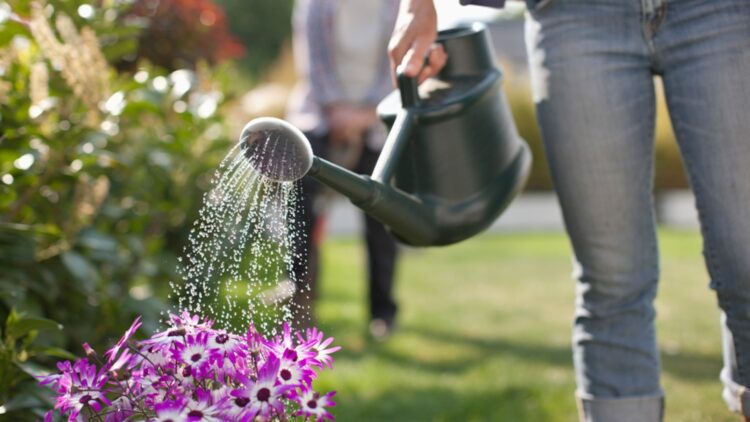
Are you a gardener and want your plants to survive the summer without problems? When temperatures rise, taking good care of watering becomes essential. Heat causes water to evaporate quickly, and if it’s not done properly, fungi like powdery mildew or botrytis can appear, weakening your plants.
Depending on the plant you have, each one will need a different type of watering, and using perlite, vermiculite, or coconut fiber in the soil can make a difference. Do you know about drip irrigation or using mulch to retain moisture? In this article, we’ll show you how to avoid common mistakes and keep your garden healthy as a professional gardener all summer long. So, let’s get started!
What’s the best time to water?
One of the most common mistakes gardeners make in summer is watering when the sun is very strong, that is, between 11 in the morning and 3 in the afternoon. At that time, it’s so hot that the water evaporates very fast, and the plant’s roots don’t get a chance to absorb it. Also, if drops of water remain on the leaves or flowers, they can act like a magnifying glass. That means they concentrate the sunlight and can burn the leaves.
So, the best time is to water in the morning, between 6 and 8 a.m. because at that time, the soil is cool and the water is absorbed better. Since there is less evaporation, the water reaches the roots properly and the plant has the whole day to dry which helps prevent diseases caused by moisture.
What if you can only water at night?
Some gardeners, because of work or school, only have time to water at night. It might seem like a good idea, because it’s not so hot anymore. But watering at night can also be bad.
When you water at night the water stays on the leaves, stem, and soil for many hours. Since there is no sun or heat, the moisture doesn’t dry quickly which causes fungi to appear, like powdery mildew or botrytis, which make plants sick.
If you can’t water in the morning, the best thing is to do it at the end of the afternoon, but before it gets dark. That way, the plant has a bit of time to dry before the temperature goes down.
How do you know if your plant needs water?
Not all plants are the same. Some, like cacti or succulents, can go many days without water. Others, like ferns or hydrangeas, need the soil to always be a bit moist. A very easy way to know if it’s time to water is this: Stick a finger in the soil, about 2 cm deep. If the soil is dry, it’s time to water, but if it is still moist, you don’t need to water yet.
You can also look for these signs: Drooping leaves, brown edges on the leaves, soft or weak stems or if the plant isn’t growing.
What’s the best way to water?
It’s not just about how much water you use or when you water. How you do it also matters: Use a watering can and pour the water directly at the base of the plant, where the roots are.
Careful! Don’t wet the leaves or flowers since these things can happen: if you wet the leaves when it’s sunny, they can burn, and if they stay wet too long, fungi can grow.
However, if you have potted plants, you can use this method:
- Fill a small plate with water and place it under the pot.
- Leave it there for a few minutes.
- The plant will take in the water from below, as much as it needs.
- Then, remove the plate, so too much water doesn’t collect.
Extra tips for gardeners to take care of watering
We have talked about many aspects of plants and watering, but tips are what really help us. So, gardeners, here are some simple tips to make watering your plants easier and more effective:
- Group plants that need the same amount of water. That way, you don’t overwater some and underwater others.
- Use soil that holds moisture well, like the kind with perlite, vermiculite, or coconut fiber.
- Cover the soil with bark, straw, or small stones to prevent it from drying too fast.
- Water slowly, so the water gets deep into the soil.
- Adjust how much you water depending on the season: in summer they need more, in winter, much less.
I hope your plants grow better once you put into practice these tips. Why don’t you comment about it with other gardeners? I’m sure it will be so helpful.