
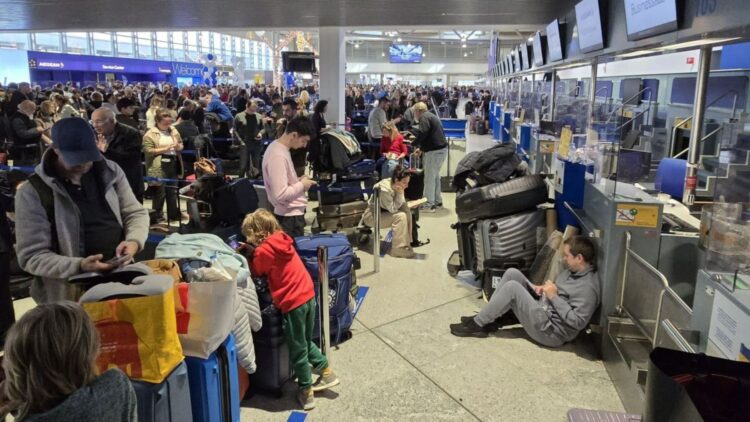
Greece has been in problems! The Hellenic Country has been forced to temporarily close its entire airspace due to technical failures, wow. This decision brought all (domestic and international) flights to a halt and caused last minute diversions and left thousands of passengers unable to board!
What happened?
The problem was detected early in the morning of January 4th, and affected communication between pilots and air traffic controllers, something that, as you know, is critical in aviation. As soon as the problem was confirmed, the strictest safety protocols were activated, hundreds of planes were grounded, and every airport had to be put on pause, there were no other chance.
When the essential fails
The origin of the chaos was a failure in the air traffic control radio frequencies, which prevented communication between aircraft and also with air traffic controllers. As happens in any kind of relationship, without communication you go nowhere, so planes had to cancel departures until communications were fully restored.
Authorities acted quickly and immediately ordered the suspension of all takeoffs and landings, as we say there were no other options. Flights that were already in the air could be managed with a lots of limitations (like blindness but without communication), but the rest were canceled or delayed without a clear departure time.
Airports full and without information
The impact was especially noticeable at Athens International Airport (the main airport of Greece). There were endless lines, screens changed every few minutes, and passengers trying to understand what was happening because no information was found there, they didn’t know when they would fly, or if they would fly at all.
At regional airports, the scene was similar. Many flights ended up being diverted to neighboring countries such as Italy, Turkey, or Bulgaria, creating a domino effect on European air traffic.
Urgent investigation and a slow return to normal
The Hellenic Civil Aviation Authority immediately announced an investigation to clarify what went wrong, and the first information pointed to a key component of the communications system. That is why action was taken so quickly. As we said, flights cannot operate without communication with controllers.
Throughout the day, a gradual restoration was discussed, although with great caution in case the system failed again. Authorities had already warned that delays and cancellations would continue until everything was fully restored and confirmed to be working at 100 percent.
Safety first
It may seem like an exaggeration to close the airspace of an entire country, but the reality is that if communication is not viable or does not work perfectly, there is no alternative. You cannot put so many people at risk at such high altitudes. Safety is the top priority on every flight, far above the economic cost of canceling flights.
And do not worry, this type of incident is not common, but when it happens, decisions like this must be made to protect the safety of aircraft and their passengers.
A blow to tourism?
Obviously, Greece depends heavily on tourism, like unfortunately many coastal areas. Now that the travel season is starting again, this type of problem can impact the entire economy of the country. Yes, we know it was only a temporary issue, but people move based on reliability. That is why authorities have insisted on resolving the problem as quickly as possible.
What should you do if you are affected?
The message to travelers is to contact the airline directly and avoid going to the airport without prior confirmation. There was not much information available at the time, which made many people even more nervous. Now, Greece is working to normalize flights and regain confidence.