
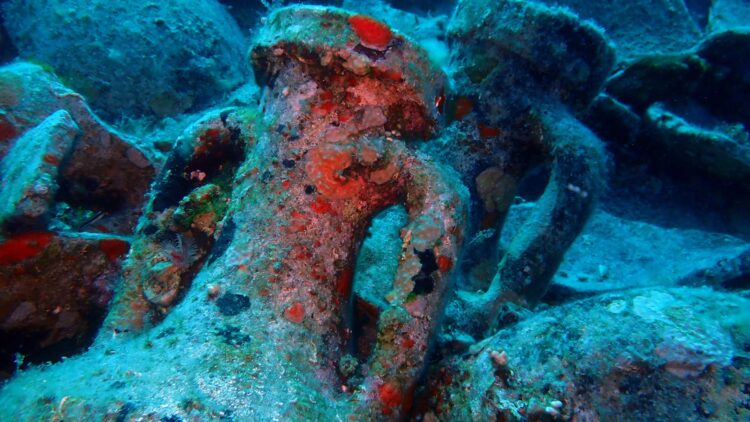
Whenever we have studied History, we have always read about great empires, epic wars, and very powerful kings, don’t you?. And even more so if we focus, for example, on great civilizations like Greece, Rome, or Egypt. But we have never thought about all the history that remains hidden under the waters or about how common people lived (not nobility or the like).
This latest discovery sheds a bit of light on that, on 2,300 years of history that were submerged beneath the mantle of the Mediterranean… until 1965, when a diving instructor named Andreas Cariolu found one of the most important discoveries of the 20th century without even realizing it. This instructor was looking for sponges in the sea near the coast of Cyprus when he discovered an ancient Greek ship, now named the Kyrenia, which was full of amphorae filled with wine, olive oil, and almonds. But… what a strange treasure, right?
What kind of ship are we talking about?
A 14-meter-long ship with nearly 400 amphorae (an ancient storage container) filled with everyday products, a discovery that took decades to analyse because they weren’t able to date the ship to a specific era.
For years, it was believed that the Kyrenia’s last voyage happened around 300 BC, based on the contents of its amphorae. However, a new study focused more on other objects found on the ship, such as fragments of wood, a small twig, and animal bones.
The Kyrenia and its history
In this way, and thanks to the combined use of radiocarbon and dendrochronology (two techniques widely used in archaeology to date found objects), scientists concluded that the shipwreck occurred a bit later, estimating between the years 286 and 272 BC.
Sturt Manning, the archaeologist leading this research, precisely dated the age of the ship, and not only that, but he also placed it as a key point in the development of ships from the classical world era and in Mediterranean maritime trade. An absolutely amazing discovery if you ask us.
Another professor from the University of Manitoba in Winnipeg stated that this vessel is not just another discovery, but it offers us a window into the lives of the past, into how these kinds of traders operated, who were likely humble crewmen sailing outside the official routes, something like smugglers of the time hoping to find some profit at the end of the journey.
Why do we know they were humble crewmen?
The answer, although not entirely clear because we don’t know who travelled on that ship 2,300 years ago, makes a lot of sense. In this vessel they didn’t find gold or valuable vases, only everyday products that were surely going to be used for trade in other places. Although, the hypothesis also exists that in the following years, the more valuable objects were looted, you know, like what happens with pyramids. But since that’s not clear either, it’s much easier and more logical to think that they were simple traders carrying their products to sell them in another land.
Why is it so important now?
The Kyrenia, a ship barely 14 meters long, represents evidence of the multiculturalism of the ancient Mediterranean and of how certain economic exchanges created connections between the populations that inhabited the Mediterranean back then.
A Greek ship that has endured more than 2,300 years under the sea now appears to remind us that daily life is also about accidents and common people, and that history doesn’t always have to be about palaces and kings.
How much more history do our seas hold and we still don’t know about?