
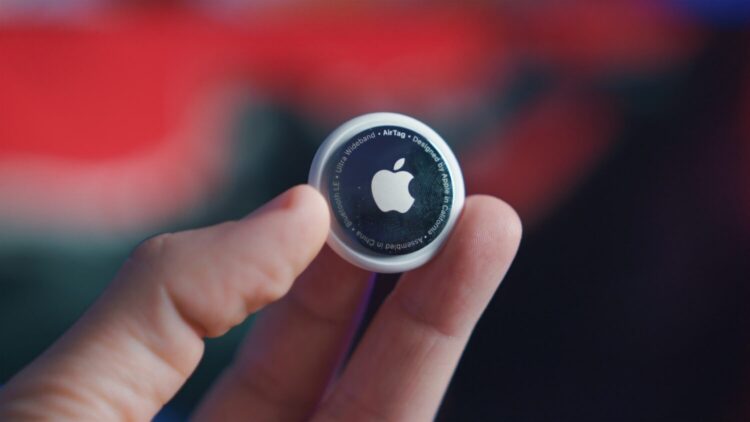
Buying a second-hand car shouldn’t be a treasure hunt, but a young man has found an AirTag hidden underneath his car. Yes, yes, terrifying. It was hidden in the spare wheel compartment. It wasn’t a toxic ex or a bad joke. It was the dealership itself who had placed it. The reason? According to them, “for safety”, but of course, the controversy didn’t even take half a minute to explode.
A notification, and the search begins
It all started with a notification on the guy’s iPhone:
“An unknown AirTag has been detected moving with you”.
And from that point on, Pandora’s box was opened.
What was an AirTag doing there?
The first reaction was to think it was an attempted robbery. But after investigating a bit and checking where the car came from, it became clear: the AirTag had been placed by the dealership where he bought the Toyota.
And what did they say when he called them?
That they had placed it to locate the car in case something strange happened: non-payment, damages, the usual. A kind of insurance… for them. But with whose permission?
The problem?
No one told him. And that’s the key. Because it’s not just that they knew where the car was going, it’s that the buyer had no idea he was being tracked.
And the thing is, this isn’t the first time a dealership does something like this. Some install tracking systems in financed cars, especially when there are special conditions. But the difference is that, when that happens, the customer signs and knows about it.
Here there was no paper, no explanation, no consent. And that’s no longer “precaution” that’s entering a very sensitive area, both legally and ethically.
Plus, we’re talking about an Apple AirTag, which can be located with outrageous precision thanks to the network of iOS devices around the world. So we’re not talking about a rudimentary tracking system.
Apple warns you… and thank goodness
Luckily, Apple already thought about these situations and its devices warn you if they detect an AirTag moving with you that isn’t yours. That’s exactly what saved the buyer from continuing to be tracked without knowing it.
From there, social media did its thing: the story went viral, similar cases started to come out, and people rightly went after the dealership. The only positive thing about all this is that the issue has come to light.
What does this story make clear?
That technology is not always used properly. And that, no matter how good the intention is (which is already debatable), the minimum is to inform. You can’t keep control of the car once you’ve sold it, as if it were still yours!!
And of course this also opens the can of digital rights: Where is the line between protecting a sale and invading the buyer’s privacy? Because here, clearly, that line has been crossed.
How to know if you’re being tracked without your permission
If you have an iPhone, make sure you have notifications activated to detect unknown AirTags. If you use Android, there are apps that also detect this type of device.
And if you’ve just bought a second-hand car… take a look at the trunk, the spare tire compartments, underneath the car… It never hurts.
And to the dealerships: take note
Even if you did it “for safety” this is not done without warning. It’s a matter of trust. And when you break it, there’s no excuse that works.
Because if the buyer hadn’t had an iPhone… would he have ever found out?
A hidden AirTag in a Toyota has revealed something bigger: the use of tracking technologies without informing customers, and with how easy it is to hide a device like that, this needs to be regulated now… The future will be digital… But if we don’t set limits, we’ll end up selling privacy for parts.