
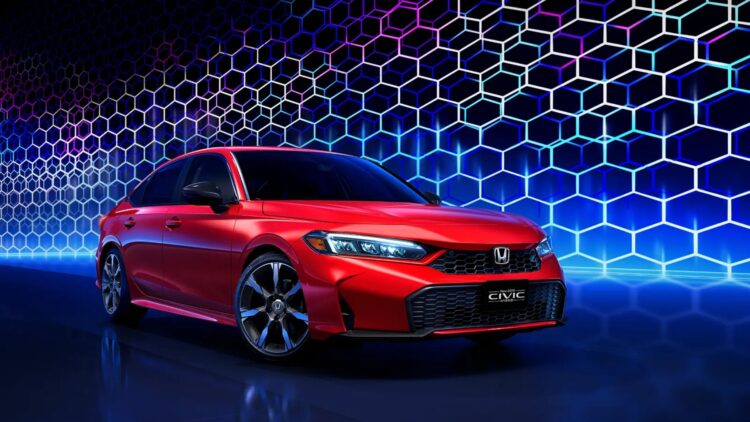
Honda is making a huge impact in the automotive industry with an important change in its strategy: apart from only focusing on EVs, the company has decided to invest more in hybrid cars and start developing hydrogen engines. For many years, it was thought that EVs were the only way into the future of vehicles, but Honda believes hybrids and hydrogen are better for the current time. So, let’s find out why Honda thinks this way.
Evs, hybrids and hydrogen vehicles
Before we get into the main issue, let’s see the difference between these types of vehicles:
- EVs: they work just with electricity and they are charged by plugging them, as if they were a mobile phone. They don’t pollute the air, but they tend to be very expensive and, sometimes, it’s difficult to charge them because of the lack of charging stations.
- Hybrids: these cars have a gasoline engine and an electric one. Both can be used at the same time or individually and the good thing is that these cars cost less than EVs and are more practical (they don’t depend on a charging station).
- Hydrogen cars: they work with hydrogen gas, which means they release water vapor. This makes them so clean, but it’s still very difficult to manufacture them and find stations to charge them.
Popularity of EVs
For the last decade, electric cars have become the symbol of the future of cars because they don’t use gasoline nor release any damaging gas, which helps fight against climate change.
Companies like Tesla made them modern and attractive, so other brands started to work on their own models, like Honda did. What’s more, many governments announced plans to leave gasoline cars behind and encourage people to use EVs.
EVs issues
It’s true electric cars have many advantages, but they also have many challenges that made Honda change its strategy:
- Price: they are more expensive than hybrids or gasoline cars.
- Charging: not every city has enough charging stations and the process can last so much.
- Batteries: they are expensive and they wear out with the passage of time.
- Sales drop: in the last couple of years, EVs sales have dropped around the world because so many people prefer waiting for them to be cheaper and more practical.
Honda’s big decision
Honda announced it will reduce EVs production by 30%. In the beginning, the company thought about investing $69 billion in EVs by 2030, but now that figure has lowered up to $48 billion.
Instead of putting its faith in just EVs, Honda will launch 13 new hybrid models by 2031 with the goal of selling more than 2 million hybrids in 2030. That’s not all, the company is working along with Toyota, Kawasaki, Suzuki and Yamaha to develop hydrogen engines that will be first used in motorbikes and small vehicles.
Importance of this
Honda’s decision proves that the future of vehicles won’t depend on just one technology, so it is probable that we will have a combination of EVs, hybrids and hydrogen cars. This way each person could choose the car that suits them most to their lives, cities and economies.
By making hybrids and hydrogen engines, the company is teaching us that sustainability is not a trend: it is about making practical and smart decisions that really work.
We may not have 100% electric transport now, but technology is advancing so fast that we are witnessing an automotive industry revolution when it comes to new ways of driving. Hopefully, we will be able to drive and have a cleaner planet, which is what we all want, right?