
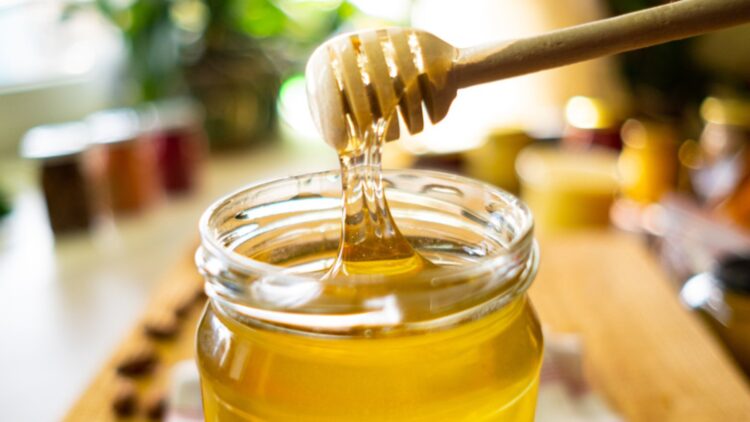
Have you ever wondered if honey ever expires? The answer is no. Opposite to most products we consume, this food can last for centuries without going bad. It’s true that with the passage of time it can become more crystallized and more dense, but it won’t be ruined.
Honey has many benefits, it can even be used to repel flies, but the most striking is its capacity of conservation, so let’s find out how this is possible.
Why foods go bad?
When we say a food is spoiled, scientifically speaking, it means that microorganisms like bacteria, moho, or fungus have taken over this food. For these microscopic lives to live they need:
- Enough free water.
- Moderate pH (not too acidic, not too basic).
- Accurate temperature.
- Oxygen.
Most of the conservation techniques look for avoiding these conditions, how? By dehydrating, cooking, refrigerating, or sealing in jars. However, even when using these methods, most foods have a limited life. Not for honey.
How bees create honey
Honey starts as nectar of flowers, a sweet liquid with lots of water. At first glimpse, the nectar would be perfect for bacteria and fungus to grow, but bees transform it into a practically immortal product. This is how they do it:
- While transporting the nectar to the hive, bees eliminate part of the water.
- They add enzymes that make the liquid more acidic and decompose complex sugars into simple ones.
- With their wings, bees evaporate the water even more, it’s like a natural fan.
Thanks to this process, the nectar that originally had between 70% and 80% of water ends up being honey with just 15%-18% of water. How crazy is nature to do this with no machine involved?
Chemical composition of honey
What makes this food unique is its high sugar concentration and its low water content. So, even though there’s still some water in it, it’s not enough for microorganisms to use it. Let’s see more in detail the factors that make honey an antimicrobial food by nature, where bacteria and fungus can’t multiply themselves:
- High sugar quantity: it attracts and retains water molecules.
- Low humidity: microbes don’t have enough free water to survive.
- Natural acidity: honey tends to have between 3 and 4 of pH, which is too low for most bacteria.
- Sealed environment: when a jar is closed, there’s not that much oxygen.
What makes honey lasts forever
I know it seems unthinkable that a food can last forever, but if this food is properly sealed, it can. In fact, archaeologists have found honey in Egyptian tombs of more than 3,000 years old and it was still edible!
However, this doesn’t mean honey is indestructible because once you open the jar:
- If you put humid or dirty spoons in it, you are adding bacteria and water that can alter the mixture.
- In humid environments, honey can absorb the water from the air and become more vulnerable.
Use it for more than eating
Although honey doesn’t go bad on its own, if you mix it with water and let specific microorganisms ferment it, you can get hydromel. Have you ever heard of this? In case you haven’t, this is an alcoholic drink that was consumed from ancient times.
This is an intentional ‘’deterioration’’ because the product is first ruined to give birth to one of the oldest drinks in the world. I’m sure you are curious now about how this drink tastes, right?
Now you know more about this food, which is more than a simple natural sweetener. Honey is a great example of how biology and chemistry combine to create a sweet, nutritious, and everlasting food.