
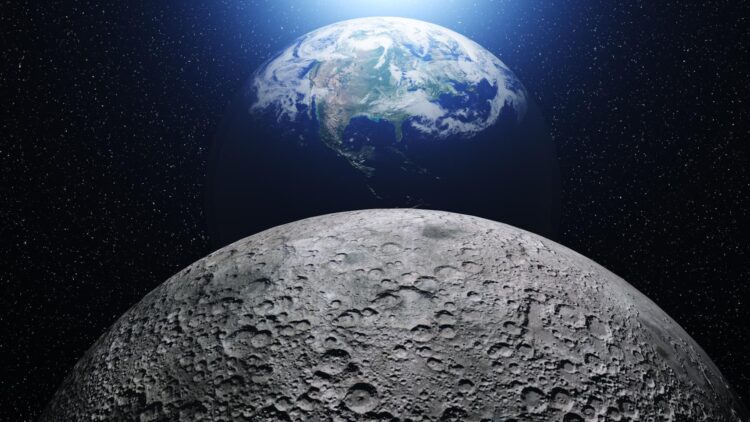
Our planet is speeding up, yes, like Hamilton when he reaches a corner. Astronomers are investigating because, since 2020 (and for still unknown reasons), the Earth has been spinning on its axis faster than usual, and the next record is about to happen. Graham Jones is the astrophysicist who is studying this phenomenon, and he has predicted the next shortest day on three possible dates: July 9, July 22, or August 5, 2025.
It’s not that you’re going to work one day less, hold your horses, the day will be shortened by 1.66 milliseconds. Not even the length of a blink!
But of course, the important thing is not how long the day lasts but why this is happening, and, although there are several hypotheses on the table, the origin is still unclear. And do you know what’s even more curious? Until recently, the planet was spinning slower and slower!
Why is the day getting shorter?
Okay, a solar day should last exactly 86,400 seconds, or in other words, 24 hours. That much we know, but Earth’s rotation has never been completely constant or exact. And as we said, until recently the planet seemed to be spinning more slowly (due to the friction of the tides caused by the Moon’s gravity), but in 2020, for some unknown reason, everything changed and our planet began spinning faster, as if it were in a hurry.
Record after record since 2020
What used to be an exception has become the new normal. In 2021, a day was recorded that lasted 1.47 milliseconds less than normal. In 2022, it was reduced by 1.59 milliseconds. In 2023, the value was 1.31 milliseconds. But the absolute record is held by July 5, 2024, when the day lasted 1.66 milliseconds less than the usual 24 hours!
Of course, it’s not that there’s a man with a stopwatch, but atomic clocks are capable of measuring the length of our days with millimetric precision, otherwise it would have gone completely unnoticed by humans.
What is causing this acceleration?
Scientists don’t have a clear explanation, but the predicted dates for 2025 do coincide with the times when the Moon’s orbit places it at its furthest point from Earth’s equator, and this affects our planet. Although it is not confirmed as the exact cause.
According to studies, the Moon has been slowing Earth’s rotation for billions of years, for example, about 4.5 billion years ago, a day on Earth could last between three and six hours, but the Moon’s gravitational pull slowed Earth’s angular momentum, turning days into what we know today.
Is it serious that the day is shorter?
We might think that a couple of milliseconds doesn’t have consequences, but in the world of technology and telecommunications, every fraction of a second counts. Global synchronization systems are designed to operate with extreme precision, so let’s hope the world doesn’t collapse over two milliseconds…
What will happen in the distant future?
Scientists believe that if this trend continues, in about 50 billion years Earth’s rotation will synchronize with the Moon’s orbit and there will be no tides (goodbye surfing), and we will always see the same side of the Moon, making it visible only on half of the planet. But don’t worry, we won’t be here to see it, just like when our Sun cools down and Earth becomes uninhabitable. Problems for our future selves, or maybe not!
But remember, it’s not like the world is going to stop completely and throw us out into outer space (that would be catastrophic), there are still many thousands of years left before the Earth ends, and surely by then, our incredible researchers will have already found a solution on another planet, or like in Wall-E! It’s not worth it for us, the humans of the present, to be afraid of that, don’t you think? We won’t even be here in body to tell the tale!