
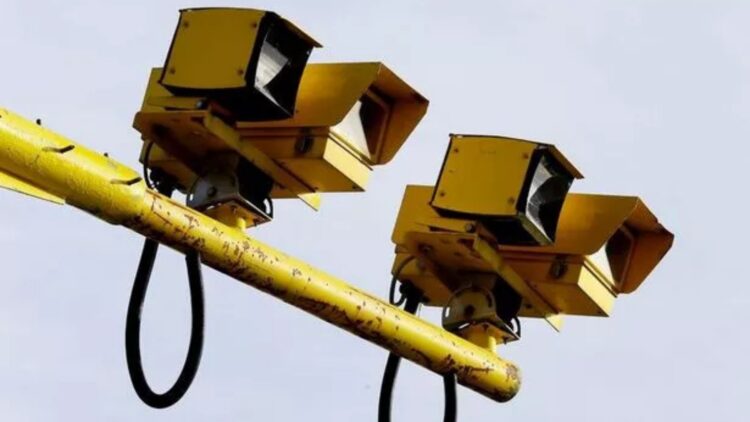
Indiana and its highways are coming with changes, and if you’ve already driven there, you’ve probably noticed the new speed cameras, and they don’t forgive anyone.
In just six months, the state’s Department of Transportation (INDOT) has issued more than 168,000 fines (over a thousand violations per day, crazy). The system started as a pilot test and has already collected more than $600,000, so everything suggests it will become a permanent measure.
The goal (they say) isn’t to fill the coffers but to prevent accidents in construction zones, because believe it or not, there are still people who don’t realize that speeding continues to be one of the main causes of death on U.S. roads.
An experiment
The program started in Marion County, specifically at the intersection of highways I-465 and I-69, one of the busiest in the state, it wasn’t chosen at random. There, the cameras automatically detect any vehicle going more than 11 miles per hour (about 18 km/h) over the limit, which is set at 45 mph (72 km/h).
The system works like this:
- The first time, you get a written warning.
- The second, a $75 fine.
And the third, $150!!!
In less than six months, 162,096 warnings were issued, 4,027 second violations, and 2,412 third ones. Wow, some people really didn’t mind paying the fine…
More than half a million dollars in penalties… and according to the state, a drastic reduction in average speed.
“Slowing down saves lives”
That’s what Natalie Garrett, spokesperson for INDOT, said. According to her, in just one month, excessive speed dropped by 75%, and with it, the risks for both drivers and construction workers, who have greatly appreciated it.
“Contractors are thrilled because they feel much safer working next to the road”.
How the cameras work
They’re not typical radars hiding behind bushes. These are smart-sensor cameras that detect violations in real time. When a vehicle exceeds the limit, the system captures the license plate, sends it to INDOT’s control center, and there the corresponding notice or fine is generated.
The best part (or the worst, depending on how you see it) is that no officer is needed because everything is automatic. This reduces the risk of secondary accidents and ensures that the law is enforced consistently and equally for all offenders!
These cameras can operate 24 hours a day, even at night or in the rain. They’re connected to a state database that identifies repeat offenders and tracks violations.
Will more cameras be installed?
For now, the program is active in four construction zones, but the good results have led the state to consider expanding it to more highways, so be careful, because INDOT already has the authority to do so if it’s proven to improve safety!
Safety or surveillance?
As expected, the success of the program has reopened the debate about automated traffic cameras. Some states have banned them for being considered invasive; others see them as an effective tool to save lives and reduce public costs. The truth? It depends on who you ask. Experts agree that the key lies in educating drivers, not just issuing fines.
But seeing the numbers, it seems that the cameras are achieving what signs and campaigns don’t always manage to do: getting people to ease off the accelerator.
Slow down, please, not just because of the fine, but because on the other side of that orange cone, someone is working to make sure you get home safely!!!