
The future is knocking on our door, all the time, too. But when it comes to technology, it seems that when we think everything has been invented, there is always some company that surprises us. And this is still happening in the renewable energy sector, where Japan is experiencing a radical change. Wait, we’ll tell you. Imagine for a moment that any surface can generate clean energy, from the roofs of buildings to bus stops and shop windows. This is what Japan is trying to do with its new super solar panel, what a great deal! An innovation that wants to transform everything we know today as renewable energy.
This panel is created with a material called “perovskite”, which allows the creation of solar cells that are much more efficient, light and flexible than traditional ones (which we remember are made of silicon). Now we are going to tell you everything we know about this new invention that aims to renew green energy.
Imagine a future in which cities are supplied with clean energy thanks to solar panels that can be placed on any surface, from the roofs of buildings to bus stops or even on cars. Well, that future is getting closer thanks to Japan and its new perovskite-based super solar panel.
Japan is betting heavily on energy independence
Since the disaster that occurred in Fukushima in 2011, they have worked very hard to reduce their dependence on nuclear energy and have a clear objective: to lead a transition to renewable energy. And the best thing is that they are doing everything in their power to achieve this. Their government has updated its energy plan, making the construction of new power plants a priority. To give you an idea, that is equivalent to the energy produced by 20 nuclear reactors!!
So, with their goal of reaching 0 carbon emissions by 2050, this is key. And another point where they play to their advantage is that they have several strategies developed with Iod (an essential material for manufacturing perovskite solar cells), and, surprise! Japan is the second largest producer of iodine in the world, which allows it to develop its own supply chain, without depending on other countries… Everything is perfectly controlled.
Have they always had it so clear?
Years ago, Japan was a leader in solar panel manufacturing, but lost ground to China, which dominated the market with cheaper products. Now, with government support and the development of PSC (perovskite crystal structure) technology, Japan is looking to regain its position. Companies such as Sekisui Chemical Co. are already working on these “next generation” solar panels.
What makes them different from traditional solar panels?
At the beginning of this article we told you that the solar panels we use today are made of silicon, and although they are quite efficient, their main problem is that they need a lot of space to be installed, so in countries with a lot of available land this is not a problem. However, if we talk about smaller countries and where the population is much greater than the land (as is the case in Japan), traditional panels are not practical at all.
The key to PSC is that they are much more flexible and lighter to manufacture, so they can be placed anywhere where traditional panels do not fit (such as on the roof of cars). So this invention would be solving one of the biggest problems Japan has, which is the lack of free space to set up solar energy farms.
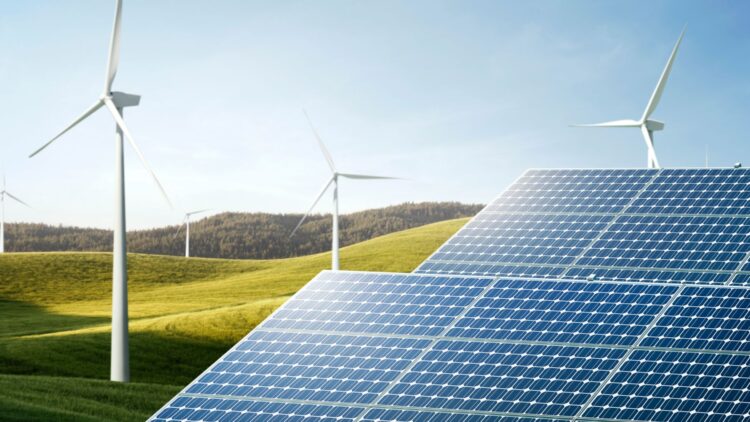
This way they could combine this energy with other types of renewable energy (such as wind energy) to achieve much greater efficiency.
Is there something wrong with PSC?
Of course, they are still facing many challenges, and although it is a very promising technology, there are two main problems that have not yet been solved. The first is that they are less durable than traditional panels and the second is that they have a high initial cost (but this is expected to improve over time as research is carried out on this new component).