
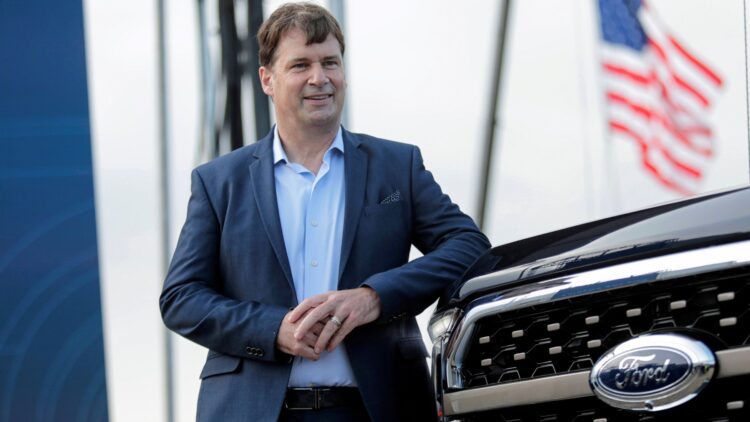
The automotive industry has a big problem, in the United States and worldwide. Young people no longer want to work in factories; it doesn’t appeal to them. They don’t see it as a future. With so many job options, getting your hands dirty in a factory is no longer attractive, don’t you think?
Jim Farley, Ford’s CEO, has decided to look back for a solution. His inspiration: Henry Ford, the company’s founder, who over a century ago changed the rules by paying his employees double the usual wage.
Farley wants to do something similar because the industry needs to renew its workforce, and he has decided to focus on giving better conditions and more opportunities to those who keep the factory running.
Back to the roots!
In 1914, Henry Ford made history by offering $5 a day for an eight-hour workday. It seems small now, but at the time it was shocking, $5!!! No one understood why he would pay so much!! But Ford had a plan, if his employees earned more, they could buy the same cars they built! That’s how he turned his factory into the engine of a new middle class.
A hundred years later, Farley heard a phrase that froze him:
“No young people want to work here”.
With wages barely $17 an hour, impossible shifts, and very little rest, many young employees ended up holding two jobs and sleeping only three or four hours a day.
Restoring the dignity of work
So Farley, inspired by Henry Ford’s old spirit, converted temporary workers into permanent employees, giving them access to better pay, bonuses, and full healthcare coverage.
“It was expensive, but these are the kinds of changes our country needs”.
The new generational challenge
The problem is that Generation Z doesn’t see it that way; they prefer more flexible jobs with better pay (which seems strange to older generations). Even though manufacturing projects 3.8 million new positions by 2033, few young people want to be part of that world.
According to Soter Analytics, the average manufacturing wage is around $25 an hour (about $51,890 a year), below the national average of $66,600.
“We need governments to take vocational schools seriously”.
Farley speaks about the German model, where each experienced worker has an apprentice from high school. A way to learn by doing, to feel part of something real, it’s admirable, don’t you think so?
When change doesn’t happen in time
Last year, more than 16,000 Ford employees joined the UAW strikes demanding raises and stability. The protest lasted weeks and cost the company a lot, but it ended with a historic agreement, they got wage improvements, job security, and a faster conversion from temporary to permanent positions.
“We can’t wait for things to improve on their own. We have the resources and the knowledge, but we need commitment from everyone” -Farley
In other words, building cars is not enough. You also have to rebuild the relationship with the people who make them.
The future, made by people
Ford is refocusing where it all began, on people. On their hands, effort, and talent. Technology may advance at high speed, but without motivated workers, innovation doesn’t mean much.
Jim Farley knows this, that’s the reason why his approach is not just about attracting young people but giving factory work meaning again. To show that manufacturing doesn’t have to be a thing of the past, but a source of pride!
And who knows… maybe in a few years someone will look back and say that in 2025 Ford made history again! Just like its founder, but adapted to a new century where the challenge is no longer just building cars, but building the future.