
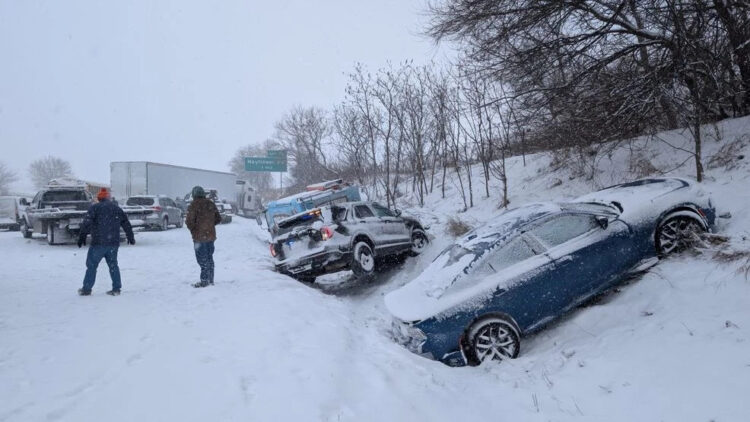
January has arrived, and even though the holidays are finally over, it is still winter. And every winter has its own story, but there is a pattern that repeats itself. Cold, a lot of cold, heavy snowfall, rain, and wind, turning roads into a real battlefield. It is no coincidence that this month is the one with the most road accidents in the United States. There is snow, there is black ice, and very little visibility behind the wheel. So you have to be prepared to try to avoid any kind of accident or complicated situation. If you are required to drive in these weather conditions, we are here to give you the best tips so that road safety prevention does not slip your mind.
Winter is not over
It is still January, early January in fact, so there are still many very tough weeks ahead, and snow is coming. The Midwest, the Northwest, the Great Lakes, and the Rocky Mountains will continue to have snow for at least the next few weeks, so driving in these regions will be quite complicated, not because of normal snow, but because of black ice. When snow gets dirty and turns into dirty ice full of debris, it becomes an ice rink. Anyone who has walked down a snowy street with soft soled shoes knows what we are talking about, and so does your tailbone.
Cars also slide. It is not something we like, but it happens, just like losing battery power when it is cold. Many times, when there are traffic jams, it feels like we are playing The Hunger Games instead of trying to get home.
Are there more accidents in winter?
Yes, because of the cold, because cars stop working properly, tires grip the road less due to cold and moisture, and braking distance increases for the same reasons. On top of that, visibility is often reduced, not to mention rain, strong winds, or snow.
Experts believe that most accidents could be avoided if we prepared properly for this time of year, but many people do not do it out of simple laziness.
Time to prepare your car
“Winterizing” your car may sound strange, but in reality, it just means using common sense. You have to be ready in case some kind of problem occurs.
The essentials
We will go from the simplest to the most specific. First, always check the antifreeze. It has to be in good condition to protect the engine and help the car start.
Another thing you must have is an ice scraper. It is essential to remove snow before getting into the car. Remember NOT to use boiling water, please.
And now come the logical and almost mandatory things: a shovel in case the car gets stuck in the snow, and chains, or the traction system that suits your car, if you drive in mountainous and snowy areas. An important detail you may not have thought about: learn how to put the chains on before you need them. Not in the middle of a snowstorm with frozen fingers.
Beyond the car
Also think about how you would survive a night stopped on the road. Remember to bring an extra coat, a blanket, water, some food, a flashlight, and a portable battery for your phone so that if the situation drags on, you can contact emergency services.
Learn how to drive
You may have been driving for years, but you have to remember that common sense is the first sense you need behind the wheel. Reduce speed, increase the safety distance, and avoid unnecessary trips if the weather is especially bad. Nothing is important enough to lose your life on the road.