
Do you find removing limescale to be difficult? We ask this because we know that keeping the glass of your shower screen clean and shiny may look like an easy task, but once you try, it often turns into a frustrating job. You scrub and scrub, but the stains don’t go away. Over time, the glass starts to look foggy and dull, and those marks can become permanent if not cleaned properly.
However, chemical engineer Diego Fernández (@quimicosparaelhogar) says there’s no need for expensive cleaning products or harsh chemicals. His solution? You’ll like it because it’s simple, cheap, and effective: use a mix of hot water and dish soap. So, let’s learn more about this trick.
Why is limescale so hard to remove?
In one of his videos, Diego explains that the reason we struggle to clean our shower glass is because the dirt is actually made of two different types of buildup:
- Inorganic limescale: This is the hard white layer that appears on the glass after water dries. It’s made of tiny calcium and magnesium particles that stick deep inside the surface of the glass.
- Organic residue: It comes from soap, shampoo, and body oils that mix with the minerals in the water. This combination forms a greasy, sticky layer called stearate, which is very hard to remove with only water.
The engineer explains that most commercial cleaning products only clean one part of the problem.
What products you should use
To clean the glass properly, you need two kinds of products:
- An acid (like white vinegar or citric acid) to dissolve the inorganic limescale.
- A surfactant (like dish soap) to break down the greasy organic residue.
Step-by-Step
Diego Fernández shares a simple and effective process to remove limescale and soap scum from shower glass:
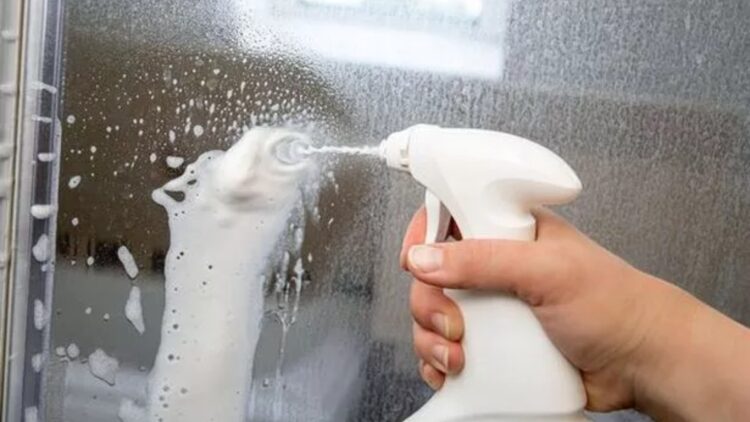
- Step 1: Remove the grease. Start by getting rid of the soap and greasy layer. Mix 500 ml of hot water with one teaspoon of dish soap in a spray bottle. Shake it a little, then spray the mix all over the glass.
- Step 2: Clean the glass. Use a soft sponge and wipe the shower glass in small circles. The hot water helps the soap work better and makes it easier to remove grease and dirt.
- Step 3: Get rid of the limescale. Once the glass is clean, spray white vinegar or cleaning vinegar directly on it. Vinegar is a mild acid that helps dissolve the mineral stains caused by hard water (like calcium and magnesium).
- Step 4: Rinse and dry. After using vinegar, wipe the glass well and rinse it with clean water. Then, dry it with a microfiber cloth so no new water spots appear. This will make your shower glass look clear, shiny, and like new.
Not enough?
If you’ve already tried using soap, vinegar, baking soda, and other tricks from the internet and the stains still won’t go away, the problem might be more serious. Diego explains that when a shower screen goes uncleaned for too long, multiple layers of residue build up and create a micro-acidic environment.
Over time, this process slowly damages the glass itself by dissolving part of its surface. This is called chemical etching, and it creates permanent stains that regular cleaners can’t remove.
The only way to fix it is to polish the glass with very fine materials, like cerium oxide — a job that must be done by a professional glass expert.
A simple trick that works
This method from engineer Diego Fernández proves that you don’t need to buy expensive cleaning sprays or harsh chemicals to fight limescale and soap residue.
We know it’s not an ejoyable task, but cleaning your shower regularly following this method will be worth it. I mean, you”ll prevent limescale and soap scum from accumulating, isn’t that great?