
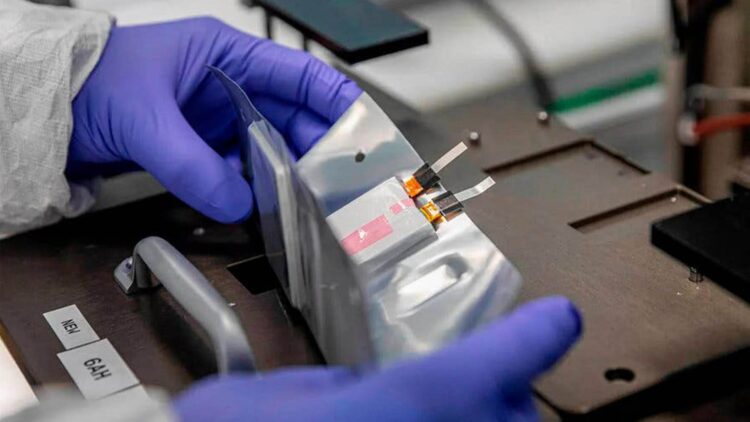
The automotive market is constantly moving (pun intended), but because time is running out and there are still no available or reliable alternatives to replace traditional combustion engines. That’s why many companies are trying to master the energy transition by venturing into other areas. That’s why now, after a few years, the development of lithium batteries, which have been dominating the scene, has been left somewhat behind by a new alternative that’s emerging like flowers in spring: magnesium.
It’s not because we want you to get ripped, because magnesium isn’t for you! But many researchers have discovered that this material, which has multiple benefits for our bodies, could also solve the current problems of lithium batteries! This means they can improve safety, reduce costs, and make them perform better. A 3-in-1.
Who discovered this?
Scientists at the University of Waterloo have developed a new electrolyte that makes magnesium batteries more efficient and viable for mass production. So, with this breakthrough, a new era in electric mobility could have opened, leaving behind concerns about lithium supply and flammability risks.
However, there is still a problem: researchers continue to face a fundamental challenge in developing functional magnesium batteries. They have not yet found suitable electrolytes for this purpose because those used in ion batteries do not work properly with magnesium systems.
A safe alternative
Magnesium battery production has stolen the show, primarily because they are less expensive than lithium and easier to produce. Furthermore, the global distribution of magnesium would eliminate countries’ ability to control lithium extraction through supply chain policies and a series of other advantages that we will explain below.
- Safer and less flammable, primarily because magnesium is non-flammable, which would prevent batteries from overheating and exploding under certain conditions.
- Greater durability, since magnesium is more resistant to aging.
- More sustainable production, since extracting lithium has a high environmental impact and magnesium is much easier to obtain.
The electrolyte that changes everything:
For all this to happen, it was necessary to find a stable and reliable electrolyte because the ones known until now didn’t quite fit with magnesium. But Linda Nazar and her team, along with Chang Li, have created a new type of electrolyte that improves the performance of batteries with magnesium anodes. Unlike previous versions, this breakthrough allows batteries to reach a voltage of three volts, which is a major step forward. Thanks to this discovery, the necessary conditions have been established for magnesium batteries to reach the market.
When will we see magnesium batteries on the market?
For now, there are challenges that must be overcome before these batteries are implemented in the market.
- Develop suitable cathodes compatible with the new electrolyte.
- Adapt magnesium battery production on a large scale (on current manufacturing lines).
- Integrate them into electric vehicle brands, such as Tesla or Toyota, which will likely be the first to adopt this technology.
Why is magnesium key?
Just as when we go shopping we would say “good, pretty, and cheap,” when we talk about motors and batteries we also have the “three” basic keys: renewable energy storage, lower electricity consumption with greater range, and a much more efficient and sustainable electrical grid.
Of course, more research is still needed before magnesium batteries can be used commercially because it is necessary to develop cathodes that work well with the new electrolytes and anodes. But how little remains to be done before we finally see a new revolution in the way we understand energy.
We’re certainly at the point where everything is going to change. Long-lasting, eco-friendly batteries aren’t long in coming; we’re already one step closer to being able to move around without polluting our atmosphere.