
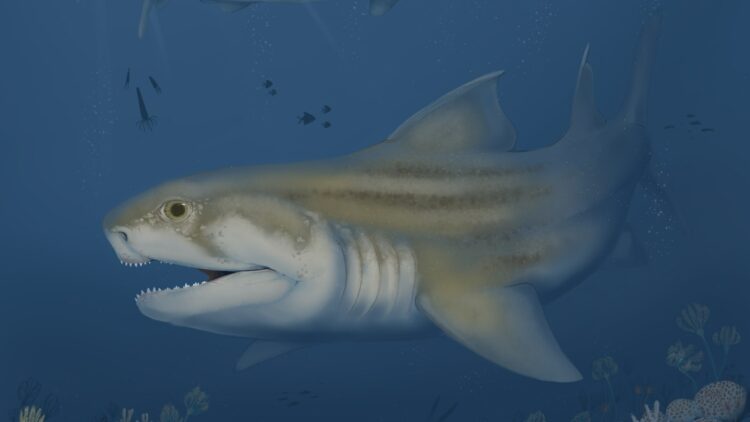
A cave. A cave that people entered thinking they would find what you usually find inside a cave: darkness and humidity. But the reality is that 325 million years ago the ocean was different, and we know it because its remains were there. Two prehistoric sharks that had never been seen or even imagined before. Two species new to science that had remained there all these millions of years waiting for someone to discover them.
It happened in Mammoth Cave National Park, in the United States. A subterranean labyrinth with more than 680 kilometers explored. Beneath tons of limestone, these two incredibly well preserved fossils of sharks appeared, sharks that were swimming when dinosaurs had not even appeared on Earth yet. And they have been there all this time since. It is truly incredible.
A journey through time
Normally, when people talk about shark fossils, they talk about teeth. Their skeletons are made of cartilage, not bone, and that means that over time almost nothing is left. But this cave is a different story. It has a stable temperature and no light or erosion, which has allowed these remains to be preserved almost completely. Fin spines appeared, jaw fragments, and even gill structures, something practically impossible in the fossil record of these animals.
Sharks from a tropical sea in Kentucky
It is hard to imagine, but hundreds of millions of years ago, what is now Kentucky was covered by a warm, shallow sea. These sharks swam there, Troglocladodus trimblei and Glikmanius careforum, belonging to an extinct group called ctenacanths, true rulers of the oceans during the Mississippian period.
One of them could measure between three and four meters, with teeth designed to crush fish, cephalopods, and any smaller shark that crossed its path. The other, although related, shows anatomical traits so advanced that they push back by more than 50 million years what was previously believed about the evolution of its lineage.
An evolutionary puzzle
These new pieces help us understand how modern sharks came to be what they are today, and yes, they look very similar to current species, although some change in shape and size.
Was it luck?
More like a review. The national park, together with universities and museums, wanted to carry out a paleontological review of the fossils they had. When they looked at them with more modern tools, there they were. It was not magic at all. They had been hidden among collections that were already cataloged. It is incredible that they went unnoticed and are now two completely new species.
Much more than a cave
Millions of people walk through Mammoth Cave every year without suspecting that beneath their feet lies one of the most important marine records in North America. As it is a national park, these fossils are protected, as is all the ground that visitors walk on. And no, they cannot be sold or privately collected.
Welcome to the family
Two more sharks added to the evolutionary tree and the confirmation that in caves “time does not pass”, meaning that the most important details are not erased.
Now there are new questions, new searches. That is paleontology. Something incredible. And even more incredible is thinking that in one of the most explored places in the country there are still many stories left to discover and tell.