
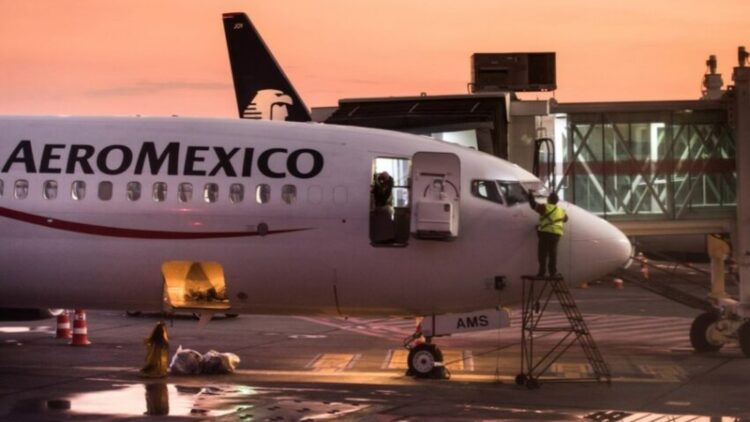
Airspace is in full drama mode after the United States suspended thirteen flight routes to Mexico. And of course, that has caused diplomatic tension in aviation. The measure obviously comes from the Trump administration, and according to reports, Mexico has violated the bilateral air agreement signed in 2015 and allegedly favored its own airlines while restricting American ones.
Aeroméxico, Volaris, and Viva Aerobus have been the most affected since they have canceled their flights to Texas, Florida, Illinois, California, and New York. Thousands of passengers were left without flights, and ticket prices are already starting to rise…
Storm in North American skies
According to the Department of Transportation (DOT), the Mexican government has tried to favor Mexican airlines by canceling schedules, changing routes, and rejecting new operations, something that goes against the 2015 Air Transport Agreement between the United States and Mexico.
Sean Duffy stated that the cancellation of these routes is a legitimate defense of the United States.
Suspended routes
The airport that will suffer the most is Felipe Ángeles International Airport (AIFA) for routes to:
- Austin and Dallas (Texas)
- Denver (Colorado)
- New York (New York)
- Chicago (Illinois)
- Los Angeles (California)
- Miami and Orlando (Florida)
And of course, these connections didn’t only move tourists—thousands of workers and students also used them.
Viva Aerobus and Volaris are the airlines most affected by this decision, as they had established AIFA as their main airport for U.S. operations.
“A unilateral and unfair measure”
President Claudia Sheinbaum has described this decision as “unilateral and excessive” and has called for diplomacy between both countries to resolve the issue. The Mexican government insists that it has not violated any agreement and accuses Washington of using the aviation issue as a political tool against them.
The Secretariat of Communications and Transportation (SICT) has already announced that it will seek to open an urgent dialogue with the Trump administration to calm the situation before the conflict gets out of control.
Politics?
Of course, and it has been pointed out by several experts. Beyond the fight over flights, there is commercial, political, and diplomatic tension, and naturally, if this continues, both countries will suffer, hey move approximately 850 billion dollars annually just in trade.
It’s no surprise that Washington and Mexico City have been struggling for months to find common ground on border security, agricultural trade, and energy issues.
So, this seems more like a political move by the Trump administration to pressure Mexico regarding other matters…
Tourists stranded and tickets through the roof
The domino effect it’s causing is enormous. Mexico is the favorite international destination for Americans, and with fewer flights available, travel agencies report that prices for trips between both countries have increased by up to 40%. Cancún, Los Cabos, and Mexico City are already feeling the impact.
And beyond tourism, local economies, restaurants, and everything that depends on that flow of travelers will also be affected.
The big losers
As mentioned, the most affected are the Mexican airlines, mainly Viva Aerobus, which had heavily invested in the U.S. market with cheap and frequent flights from AIFA. Now it is losing its main routes with Texas, Florida, and California and will have to slow its expansion…
But Volaris and Aeroméxico are also suffering, routes like Los Angeles–Mexico City or Chicago–Monterrey, which used to have daily flights, will no longer operate. Air traffic is expected to drop by about 15% in the coming months if an agreement is not reached soon.
And now?
For now, the DOT is open to negotiations if Mexico guarantees compliance with the agreement, so the flight routes could be restored.
But it doesn’t seem like those talks will be easy…
Meanwhile, the airlines are considering legal action, and local governments in Texas, Florida, and California are pressuring to resolve the issue as soon as possible.
What if my flight was canceled?
For now, they assure that affected passengers will be able to request refunds or reschedule flights, although they also specify that it could take weeks, so good luck.
One of the busiest routes on the continent is now the stage for a political battle. We will have to wait to see what happens between the two countries.