
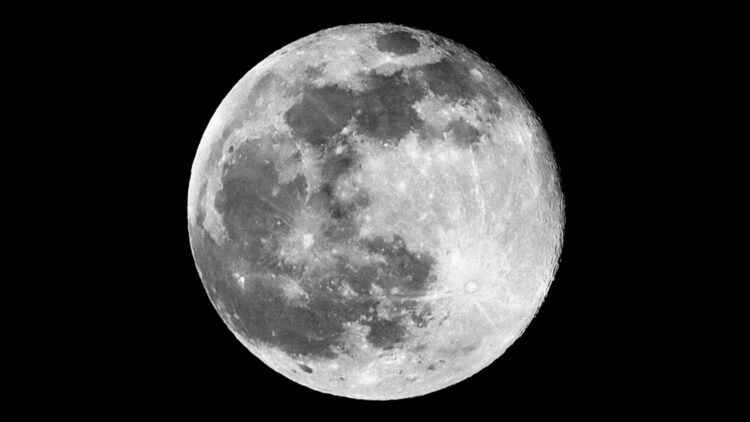
Let’s talk about the Moon! A new study suggests that the Moon could be way more valuable than what we think. Researchers believe that on its surface there are craters that contain precious platinum-group metals such as platinum, palladium, and rhodium; apart from water trapped in minerals. If this is confirmed, the Moon would become one of the richest places when it comes to resources in the solar system, which are crucial for Earth and space exploration. So, let’s learn more about this study.
How much platinum and water could the Moon have?
The figures that researchers estimate are very surprising, so let’s have a look:
- Up to 6,000 craters of more than 1 km diameter could contain precious platinum-group metals.
- If only considered the biggest craters, of more than 19 km wide with central peaks, the number lowers to 38 craters with higher probability with concentrated metal deposits.
- Regarding water, up to 3,350 craters of more than 1 km could contain hydrated minerals. When focusing on the biggest ones, the number goes down to 20 craters with clear deposits.
This means that the Moon could be the richest place when it comes to resources, even richer than asteroids near Earth that were considered the main option for space mining.
Why platinum and water are important
Platinum and metals from its group are very rare on Earth, but they have a great value. They are used in industries like medicine and advanced technologies, and new sources of these metals could transform many sectors and reduce the environmental impact of mining on our planet.
However, water can be even more important for the future of humanity in space because water on the Moon would let:
- Provide astronauts with potable water.
- Generate oxygen to breath.
- Produce fuel for rockets and future missions.
Transporting water from Earth is very expensive and difficult, that’s why finding it on the Moon would be a radical change.
Why the Moon and not asteroids?
For many years, it was thought that asteroids mining was the best option since many of them contain precious metals. However, this view has some issues:
- Asteroids near Earth are not that many.
- They are difficult to reach because they move unpredictably and tumble in space.
- Landing on them and extracting resources would be extremely expensive and complicated.
Instead, the Moon is way near, always at the same distance, and with a predictable position. It is true that mining there wouldn’t be easy, it’s much more practical than an asteroid.
What next?
The big question now is: which craters on the Moon really hide these resources and how can we extract them? Researchers suggest that the best option is not sending expensive landers that could fail, but use remote sensors from lunar orbit.This way the most promising craters could be identified, so that scientists can study them and eventually mining them.
So…
For you as a reader, this discovery is more than just science news, it is a glimpse into what our future could look like. Imagine astronauts using water from the Moon to fuel rockets or precious metals mined from lunar craters powering technologies back on Earth. The Moon is no longer just something to dream about; it may become a place that changes daily life for everyone here.
So the next time you look up at the Moon, remember: it might not just be shining with reflected sunlight, it could also be shining with the promise of our future. These types of discoveries are exciting, right? Do you think we will be able to witness these incredible goals? I hope so.