
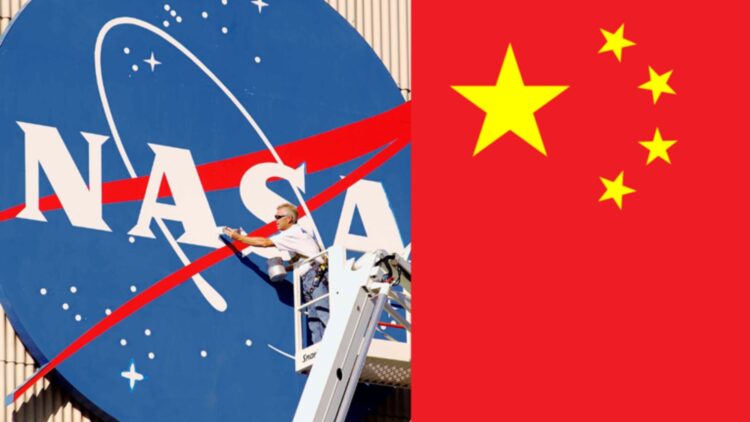
When we talk about NASA we think about rockets, astronauts, and huge missions that have been a milestone in history. However, this time NASA is the protagonist of today’s article because of a very delicate measure: banning Chinese citizens from accessing its facilities, networks and materials, even if they have a valid U.S. visa.
This has surprised a lot of people, but NASA states it’s an internal decision to protect the safety of its work. So, let’s learn more about this situation.
The reason for NASA’s decision
The measure became a reality because in July a dual Chinese-American citizen admitted carrying out industrial espionage. Among the stolen information, there were very important data: sensors designed to confuse heat-seeking missiles and radiation-hardened cameras that the U.S. deploys in orbit to detect potential threats like rockets and hypersonic vehicles.
This adds to other espionage cases related to the U.S. Navy. In this context, and having in mind that NASA collaborates in many projects with the U.S., the agency decided to close any possible door to leaks. Basically, this decision’s main goal is to reduce risks before there is another leak of important data.
National pride at risk
Beyond security, there is another symbolic reason behind this measure since the U.S. and China are competing for a very concrete goal: sending once again humans to the Moon.
Some former NASA workers even admitted that Chinese taikonauts could land on the Moon before American astronauts. The idea wasn’t well received by the agency and Sean Duffy, NASA’s acting administrator responded: “Our mission is maintaining American dominance in space. China wants to get there, but we’re getting there first.”
For Duffy, the comeback to the Moon is something more than a technological challenge, it’s the previous step to sending a crewed mission to Mars. In this scenario, any advantage that China can have is a risk for the U.S. leader position the country wants to keep.
What the law says in the U.S.
U.S. law keeps a very tight grip on NASA’s relationship with China. By rule, the agency cannot work with China’s space program or with Chinese space companies, unless Congress gives special permission.
One of the few exceptions happened in 2023, when NASA requested access to lunar samples from China’s Chang’e 5 mission. The material was considered too valuable to pass up. Chinese state media later presented that request as proof that their country had become a space power the U.S. could no longer ignore.
A rivalry made obvious.
Taking into account espionage cases, legal barriers, and the renewed race to the Moon, NASA’s move starts to make sense. Excluding Chinese citizens isn’t just a bureaucratic step — it reflects a wider strategy to safeguard U.S. interests and reinforce its leadership in space.
The ban shows two sides of NASA’s role: on one hand, a scientific institution dedicated to discovery; on the other, a key player in the political and strategic competition between the U.S. and China.
So…
NASA’s latest restrictions come down to three key drivers:
Security: preventing further leaks after proven cases of espionage.
National pride: keeping the U.S. at the front of the race to put astronauts back on the Moon.
Legal framework: existing U.S. law already blocks most collaboration with China, with only rare exceptions.
Taken together, these factors explain a tough but strategic move — one aimed at protecting sensitive technology and strengthening America’s standing as the top space power.
And the bigger picture hasn’t changed: the race to the Moon, and eventually Mars, is still underway. In that race, every choice matters, even decisions made far from rocket pads and mission control.