
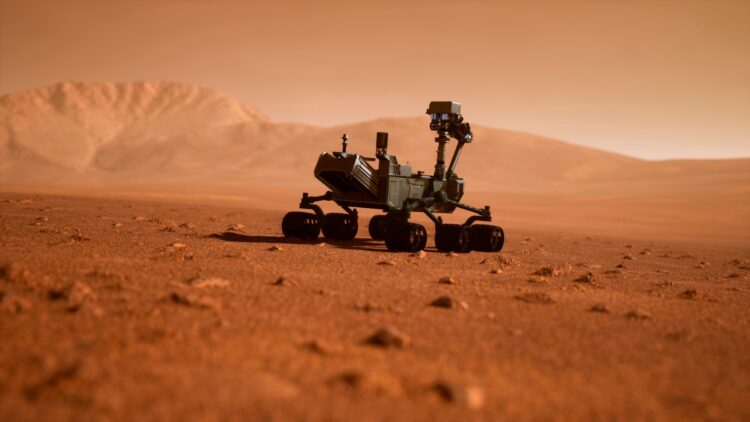
Signs of life on Mars? Thanks to the Curiosity rover, NASA was able to study Mars and look for these signs. During this mission, Curiosity found organic compounds and hydrocarbons, which are important clues. This discovery is part of a bigger goal: space exploration and the possible colonization of Mars. Scientists also study the Martian atmosphere and measure time in Martian days to understand how life could survive there. So, let’s see what NASA discovered more in detail and the importance of it.
Why are we looking toward Mars?
Earth is having many problems, like the damage to the ozone layer, which is a part of the sky that protects us from the sun. But it’s getting thinner, and that makes living here more difficult over time. That’s why scientists from all over the world, including those from NASA, are looking at other planets where maybe we could live in the future.
One of those planets is Mars, which is pretty close to Earth compared to other planets. The big question scientists ask is: Could life exist on Mars? Or at least, did life exist there a long time ago?
What is NASA doing on Mars?
To find out if Mars can be a place to live, NASA has sent the Curiosity rover, a robot built especially to go to Mars, move around the ground, take pictures, and most importantly: drill holes in the ground to take out rocks and study them. In the year 2013, after many tries, Curiosity drilled its first hole on Mars and took a rock sample.
What did they find in the Mars rock?
When NASA scientists studied the rock that the robot brought, they used some of the most advanced and expensive equipment in the world. After many tests, they found that there were organic molecules in that rock. These molecules are chemical compounds that are related to life. It doesn’t mean they found Martians or living beings, but they did find clues that life could have existed on Mars, even if we don’t know exactly when.
One of the compounds found is called a long-chain hydrocarbon, which is also found on Earth and can come from living organisms. That was a big discovery for science.
What else have the scientists done?
NASA scientists have been doing experiments for many years with Mars, but the most successful mission was when the Curiosity robot drilled that hole. Before that, it was very hard to send things to Mars because its atmosphere (the air around it) is very different from Earth’s.It’s very thin, but also very difficult for something to land safely.
Thanks to better technology and what they learned from earlier missions, they were able to make Curiosity work well and do what other robots couldn’t do before.
Will we be able to live on Mars someday?
A question many people ask is: Will we be able to live on Mars like we live on Earth? The answer right now is: not completely. The air on Mars is very toxic and dangerous for humans. This is because of something called rust, which covers almost the whole surface and gives the planet its red color. We wouldn’t be able to breathe or survive there without special suits or without building a protected environment.
But not everything is lost. Scientists are thinking about ways to change Mars’ air, so that one day it could be more like Earth’s. One idea (even if it sounds extreme) is to use nuclear explosions to change the gases in Mars’ air. That idea hasn’t been used yet and it’s not approved, but it shows they are looking for solutions.
Why is studying Mars so important?
Exploring Mars not only can help us have a “plan B” if Earth becomes unlivable, but it can also help us answer a very important question: Where do humans come from?
On Earth, scientists study how life began, but there are still many doubts. If we find more clues about life on Mars, we could understand better how life began in the universe, and that could also help us learn more about ourselves.
What happens now?
Even though we haven’t found life currently living on Mars (like plants, animals, or people), this discovery is a big step for science. We should read more about NASA’s missions since they can show us a lot of information about some doubts we may have about our planet.