
What if we were not alone in the universe? It is the wet dream of many, we cannot deny it. Science and imagination have always gone hand in hand in the search for life beyond the confines of Earth.
Speaking seriously, new NASA studies suggest that the necessary conditions for life could exist very close to Earth, but wait, we are not talking about flying saucers or little green martians, but about simple, microscopic, discreet life. Chemistry and energy, what more can we ask for, for now?
Life is a consequence
Many scientists believe that life is not a rarity, but a logical consequence when several ingredients come together, specifically water, energy and chemical compounds.
The geochemist Charles Langmuir, from Harvard, believes that life is a planetary phenomenon, that it is not something unique to Earth, but something that can arise wherever the conditions fit, even if they are not green, elongated, human shaped beings.
Titan, a new moon
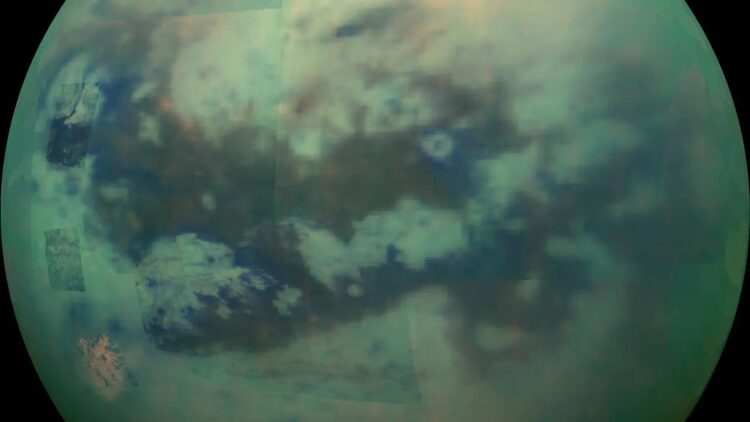
Titan is Saturn’s largest moon. For years it was thought that it hid a huge ocean of liquid water beneath its surface. A dream for astrobiology, of course. Now it is believed that it does not have an ocean, but high pressure ice with pockets of liquid water trapped inside, less spectacular, perhaps, than green elongated figures.
It changes everything
Those pockets of water are in direct contact with Titan’s rocky core, and that is where water can dissolve minerals, carry nutrients and trigger more complex chemical reactions.
In addition, the moon’s internal heat could keep those zones at surprisingly “comfortable” temperatures, close to 20 degrees. In other words, it would not be a frozen hell, but rather a natural laboratory quietly operating for millions of years.
Water + heat + chemistry = possibilities
Life? Yes. Complex life? No
We have to lower expectations. If there is life on Titan, it will be simple. Very simple. Something similar to bacteria, adapted to extreme conditions.
Even so, finding microbial life outside Earth would be quite incredible for scientists.
Dragonfly
This robotic drone, a kind of space octocopter, is designed to fly over Titan’s surface and analyze its composition. Now that it is known there is no ocean, it will be possible to better investigate what its icy interior is really like.
Closer than we imagined
Titan is more than a billion kilometers away, yes, but it is not that far. It is proof that you do not need to go to another galaxy to find potentially habitable environments.
Less cinema, more reality
Hollywood has taught us to imagine intelligent, technological extraterrestrials similar to us, but the reality is that for now, we are only searching with microscopes.
What if we were not alone because we never have been? What if life were much more common, just in another kind of “container”?
To sum up!
- Could there really be life close to Earth? Yes, at least in theory. Titan is being studied because it has chemical conditions that could allow simple forms of life.
- Are we talking about aliens like in the movies? No, nothing like advanced civilizations.
- Why is Titan so important now? Because it has pockets of liquid water, and where there is water there could be microbes.
- Would they be dangerous? If they exist, they would be harmless.