
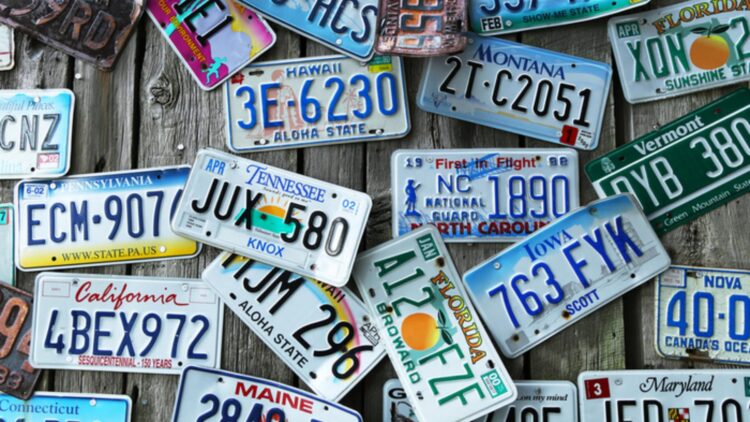
No more front license plates in Nebraska. For more than 100 years, license plates have been a crucial piece of every vehicle. They have resisted the sun, rain, and dust; even though they have always been at the front and back of the vehicles. However, this is about to change.
From 2029, the state of Nebraska will eliminate front license plates and will break with a centenary tradition. This might seem like a small change, but this decision could be the beginning of the end of traditional metallic license plates in the entire United States. So, let’s learn more about this change.
New era for license plates in Nebraska
In April of 2025, the Nebraska legislature passed Legislative Bill 97 which eliminates the obligation of using the front license plate on vehicles from 2029. Since that year, it will only be compulsory to use the back license plate.
What’s more, this new law includes a multi-year registration system, allowing drivers to keep their plates for several years before renewing them. This will reduce paperwork for both the drivers and the Nebraska Department of Motor Vehicles (DMV) and will make the entire process faster and cheaper.
Senator Brad von Gillern, who sponsored the bill, explained that most modern vehicles are no longer equipped with built-in front plate mounts, and with this new measure these types of problems will disappear. Another positive point is that Nebraska will save about $8 million on aluminum because this is the material license plates are made of.
Why this change matters
Nebraska’s decision is more important than it seems. It’s not about the aesthetic, but also about a practical and economic transformation. Among the main reasons we find that:
- It reduces production and shipping costs.
- It uses less aluminum, which is more environmentally friendly.
- It simplifies registration renewals through longer plate cycles.
- And it solves issues for modern cars that don’t have a space for a front plate.
Also, removing one of the license plates reduces the workload of the Department of Motor Vehicles and, therefore, it will speed up the management of registers and lower paperwork.
Nebraska is part of a national tendency
Nebraska is not the only state making some changes about license plates:
- Ohio removed the front plate in 2020.
- Utah plans to do the same by 2025.
- Illinois is redesigning its plates.
- And California is returning to a simpler, numeric design.
This is creating a mix of vehicles with different types of license plates: some modern and others traditional, depending on the legislation of each state.
At the same time, technology is changing the scenario. Today, there are digital license plates linked to the cloud and show the vehicle’s data on electronic screens. That’s not all! We can also find that some states are testing vinyl or adhesive plates that stick to vehicles without needing to drill holes. Automated cameras are also taking over the job of identifying vehicles, which could make metal plates less important in the future.
Challenges
Despite all the advantages, this Nebraska change also generates some doubts and challenges like:
- Digital plates could track vehicles in real time, creating privacy worries.
- Electronic plates might be hacked or counterfeited, posing security risks.
- Older vehicles may need expensive modifications to fit new systems.
- And tradition itself — the habit of having metal plates — could be hard for drivers and collectors to let go of.
Many classic vehicles’ lovers and collectors could also oppose this because metallic license plates are part of vehicles’ history and aesthetic.
Nebraska is leading the way toward the future
In the coming years, the familiar metal rectangle may disappear, replaced by digital screens or smart adhesive labels that store vehicle information electronically.
Nebraska’s bold move could become the first step in a national transformation — one that leads to a new era of vehicle registration, where technology replaces tradition and efficiency takes the wheel. Do you think this change is a good idea?