
It has taken more than 50 years for science to solve a medical mystery that began with a clinical case in 1972 and that no one was able to explain until now. It all started with a pregnant woman whose blood test showed something strange: an essential protein did not appear completely. Since then, the case was filed away as “unsolved”…. until finally, it has been discovered that it was all due to a new blood group, the so-called MAL system.
And why is this important? Well, more than it seems. If this sounds like some distant medical topic, keep reading, because this affects transfusions, pregnancies, and even how we react to certain diseases. But let’s go step by step first.
What is blood and why is it so crucial?
Maybe you don’t remember that class in high school, but here’s a quick summary. Blood is a vital tissue that transports oxygen and nutrients throughout the body and collects waste to eliminate it. In other words, it’s the body’s most efficient delivery service: it brings the good stuff and takes away what’s not needed.
That’s why it’s so important to understand its characteristics, especially when it comes to transfusions or delicate medical procedures, because a transfusion with an incompatible blood type can be very risky for the person receiving it. And that’s where blood groups come in, which are more than 40, even though the most well-known are 8 (A+, A-, B+, B-, AB+, AB-, O+ and O-).

47 blood groups? Yes, and now there’s one more: MAL
Most of us know the basics: A, B, AB and O, along with the famous Rh factor (positive + or negative -). But in reality, there are up to 47 blood group systems, each with its own characteristics. And the MAL system now becomes number 47 on that list, discovered after years of research. What’s most curious about this system is that it’s still not known exactly which gene produces the protein that appears in an incomplete form. The only clear thing is that this structure is different, and that can make a big difference in specific medical situations.
So what is the MAL system?
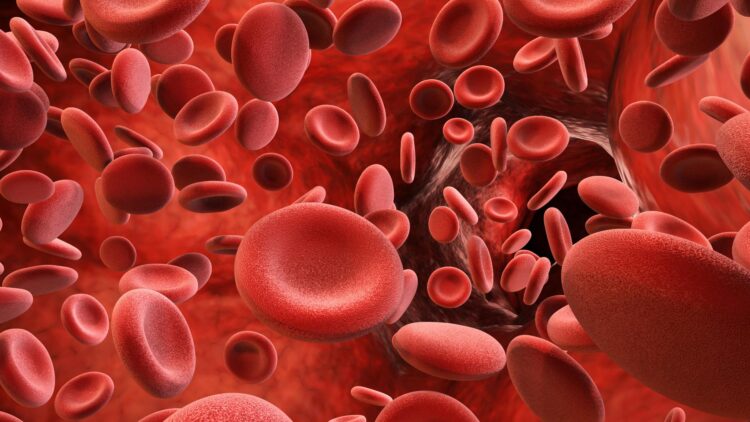
Unlike the known ABO system or the Rh factor, this new group is based on the presence (or absence) of an antigen called AnWj, which covers the surface of red blood cells.
Normally, 99.9% of the population has it. But some people, like the woman who started this case in 1972, do not have it. This makes their blood unique and potentially dangerous in a poorly managed transfusion.
The absence of AnWj is due to a mutation that prevents the production of this antigen, but this system plays an essential role; it maintains the stability of cell membranes and regulates cellular transport.
Why is this discovery so important?
Because not all bodies react the same to a transfusion, a transplant, or a pregnancy. Sometimes, a small difference in the blood can cause rejection or a serious complication. And knowing all the possible blood groups helps minimize those risks.
This blood type is incredibly rare. According to Dr. Louise Tilley, a hematologist at the UK’s National Health Service and one of the leaders of the project, there are only three confirmed living people with this blood type.
Does this change anything in Medicine?
Yes, because from now on, this group can be detected in genetic tests, and it will also be possible to know if it’s MAL due to being negative or due to something in the person’s system caused by a disease. And of course, it opens the door to new research on little-known blood disorders, as well as improving accuracy in transfusions between people with a similar system.
And does it affect newborns?
The case of the pregnant woman opened the door to an incredible study, but no, the AnWj antigen is not present in newborn babies; it appears after birth, so doctors will need to adjust tests to detect this gene in pregnant women (especially if there are blood incompatibilities between the mother and the foetus).
The human body continues to surprise us. The more blood groups we know, the safer transfusions, pregnancies, and other medical procedures will be. But after 50 years of questions, the circle is finally complete!