
Ohio is making some big changes when it comes to the minimum wage, and we are going to tell you all about them: the increments, what promises were not fulfilled, and what new proposals are currently being discussed. The minimum wage is the lowest amount of money an employer can legally pay, and understanding these changes can seem very complex. This is why we are going to explain it very clearly, so let’s get started.
Ohio new minimum wage increment in 2026
Ohio confirmed a new increment of the minimum wage that will be implemented on January 1 of next year. From that day, workers who don’t receive any tips will start earning $11 per hour, which is a bit more compared to the current salary ($10.70 per hour). This equals a 2.8%, which means it’s not a big change. However, it is part of the normal process Ohio does every year. What about workers receiving tips? In their case, the increase will be smaller: their pay will rise from $5.35 per hour to $5.50 per hour. Even though they receive tips, the law requires that they receive a base hourly wage, and that base amount also increases.
Every January 1, Ohio updates the minimum wage to help keep up with rising prices over time. This small yearly change is meant to help workers keep more of their buying power.
On the other hand, some workers will continue earning the federal minimum wage, which is $7.25 per hour. This applies to employees of very small businesses and to teenagers who are 14 and 15 years old. The rule works this way because Ohio’s higher minimum wage only applies to businesses that make more than $405,000 per year.
The $15 wage never happened
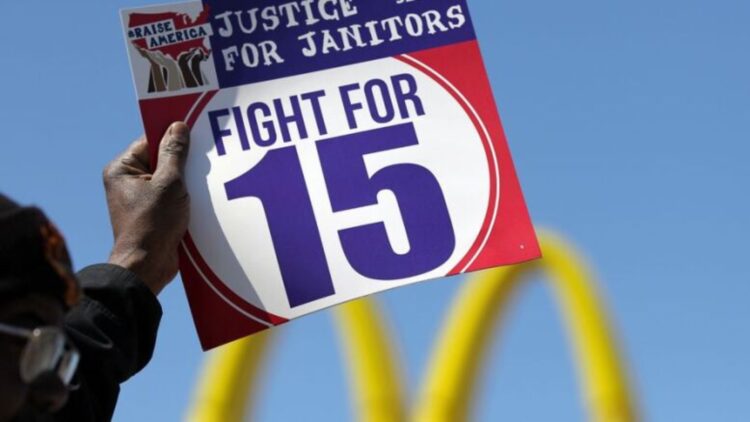
Ohio tried to increase the minimum wage to $15 per hour for the year 2025, but that never became a reality. A group called One Fair Wage tried to push for a constitutional amendment to get this increase placed on the 2024 ballot. However, they were not successful.
Later on, the organizers of this initiative said they would try again to place the issue on the November 2025 ballot, but that also did not happen.
New bill to increase the minimum wage to $15
Even though the original promise of making the minimum wage $15 in 2025 didn’t happen, there is a new effort to increase the minimum wage in Ohio. State senators Kent Smith and Hearcel Craig introduced Senate Bill 234, a proposal that would gradually increase the minimum wage over several years. The plan in the bill is the following:
- $12 per hour in 2026
- $13 per hour in 2027
- $14 per hour in 2028
- $15 per hour in 2029
Senator Kent Smith believes that one way to help is to ensure that workers have more money from the jobs they do. For that reason, this bill proposes gradual increases until the wage reaches $15.
However, it is important to remember that this bill is not a law yet. It still has to move through the full approval process before it can become an official rule for employers, so it may take some time.
So…
Ohio’s situation is a bit of mix decisions because we have the already set increments, but also the new bill that aims to reach $15 by 2029 gives a possible way things could move in the future. If it becomes law, it would slowly increase wages over the next few years.
Basically, some progress is guaranteed, some goals fell short, and others are still waiting for their chance to become reality.