
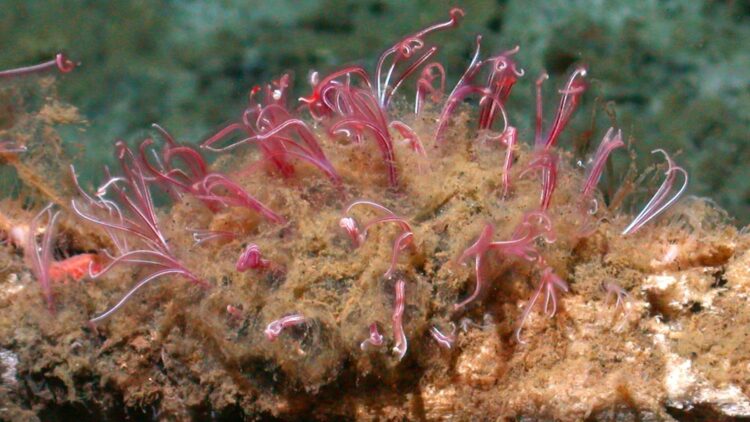
Bone-eating worms… What? A new species? Not at all, they’re worms that eat bones deep down in the ocean, but not just any bones—huge ones, like the skeletons of whales or ancient sea reptile. They don’t go for leaves, plants, or food scraps like other animals. The curious thing is that they’ve been around for 100 million years!
You might have heard about other random things deep down in the ocean, but these worms seem so interesting. So, let’s learn more about them, shall we?
What exactly do Osedax worms do?
When a large animal, like a whale, dies and sinks to the ocean floor, its body becomes food for lots of different creatures. That’s when Osedax worms show up. They don’t have normal mouths or teeth, but they dig into the bones and absorb nutrients with the help of bacteria that live inside them. They do all of this quietly, deep in the ocean, far from human eyes.
How do we know they’ve been around for so long?
A group of scientists from University College London (UCL) and the Natural History Museum in the UK asked that question. They used technology similar to X-rays (called CT scanning) to look inside over 130 ancient fossils without breaking them. They wanted to see if there were signs that these worms already existed back when dinosaurs were alive.
The answer is yes! They found six fossils with small tunnels or holes in the bones, which matched the same kind of marks Osedax worms leave today. Back then, there were no whales, so the worms fed on the bones of other large sea creatures, like mosasaurs, ichthyosaurs, and plesiosaurs.
What did they discover from this?
Thanks to these burrows, the scientists identified seven new types of worms (called ichnospecies—species known only by the traces they leave behind, not their bodies). What’s interesting is that some of the ancient holes look almost the same as the ones Osedax worms make today, meaning these worms haven’t changed much in over 100 million years.
The team also looked at tiny bits of rock around the fossils to figure out exactly how old the bones and the worm marks were. They found out that the fossils were from the Cretaceous period, meaning the worms had already evolved at least 100 million years ago.
What’s next for the scientists?
Even with these discoveries, there’s still a lot to learn. There are probably more ancient bones out there that could show traces of these worms. This is why scientists also want to keep studying the worms that still live in the ocean today, if they look at their DNA and compare it to fossil evidence, they might better understand how these creatures evolved over time.
One of the researchers, Sarah Jamison-Todd, said there are many more bone tunnels out there, both ancient and modern. Some from the Cretaceous period even look like the ones being made today. She explained that finding out whether the same species made them—or whether different worms just evolved to dig in similar ways (this is called convergent evolution)—could help us understand how they’ve changed and what role they’ve played in marine life over millions of years.
A mystery from the deep sea
Osedax creatures might not be well known, but they’ve been part of ocean life for a very long time. For millions of years, they’ve been feeding on bones and helping break them down at the bottom of the sea.
This finding proves the ocean still has many secrets left to discover. Who knows what creature scientists will find next.