
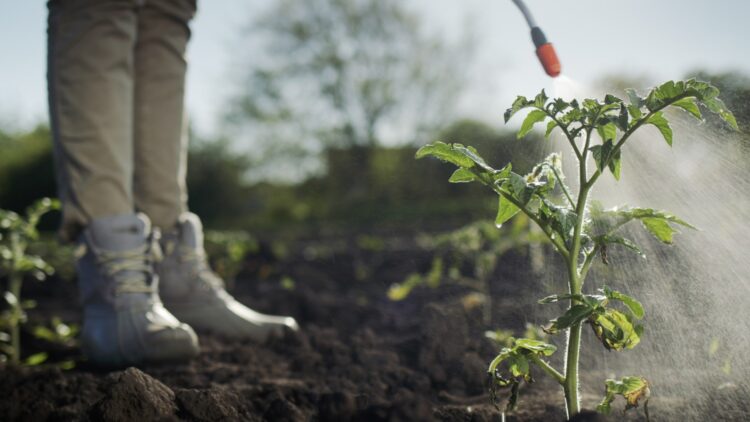
Many of us believe that eating lettuce or tomatoes is always healthy. But what if we told you that this very natural thing for us when we go on a diet could be much less healthy than we think? Well, listen up because many of these vegetables have been sprayed with pesticides and could be contaminated. Have you ever thought about that? Sociologist Rafael Navarro de Castro, also graduated in Extension and Rural Development, is demanding that, just like with tobacco, every time we buy these types of products we should be told how many pesticides they contain and that way, we should know, at least, the real composition of what we are going to put in our mouths.
What are pesticides?
We are talking about chemicals that are made to kill insects and fungi, and pests that damage crops, but, it does not only affect these types of beings, there are also studies that have identified hormonal alterations and even some types of cancer that come from the consumption of fruits with pesticides. The main problem? Although governments have established limits for their use, the combination of several pesticides in a single food is possible (so you can eat a tomato that mixes the maximum of each pesticide allowed)
About Rafael Navarro
This man has been trying to fight against pesticides for more than twenty years. In his book “Greenhouse planet” he tries to expose the dangers and impact of agrochemicals on human health. Rafael changed his place of residence and has witnessed climate change with his own eyes. In addition to this, he has been researching intensive agriculture in the regions of southern Spain (Andalusia) where there are thousands of hectares covered with plastic.
Navarro blames this whole process on capitalism and productivism and that all this has developed a way of making crops profitable: the greenhouse (with which they manage to produce all kinds of fruits during all seasons of the year)
Do greenhouses have negative effects?
For Navarro the answer is clear: although greenhouses make crops profitable, from an environmental point of view we would be talking about an attack. This type of practice contaminates the soil and water, causing overexploitation of aquifers and resulting in labour exploitation.
About genetically modified food
Another point that this sociologist addresses is about genetically modified foods, such as cereals or fish full of microplastics. For him, the question is immense: why do we continue to buy this type of product if we know that they are full of chemicals that harm our bodies? He believes that humans are caught in a “loop” in which we do not pay attention to sustainability and that as a group we should be much more aware.
At this point, Navarro mentions Monsanto, the large transgenic products company, to comment that in the United States there are already sentences condemning this company for using carcinogenic products.
He also explains that there are many people who have tried to “clip its wings” when talking about pesticides because, according to other people, people do not want to know what is in the fruit and vegetables that they are going to put in their mouths. However, he demands that the population be notified of the pesticides contained in what they consume.
The problems of being an activist
Navarro explains the abuses and criticisms that have been received by all those who have been trained in research against the food industry; activists such as Rachel Carson, Petra Kelly or even Greta Thunberg have inspired this author to write his work (whose protagonist, Sara, is a female activist). His book not only deals with the contamination that is occurring in the land (which will probably become unusable in a few years) but also with the life of migrants in an irregular situation who suffer labour exploitation that borders on slavery.
How can we fight against pesticides?
Although a single human being cannot eliminate them completely (because it should be a collective effort), there are some tips that we can follow to reduce their consumption. For example, washing the fruit and vegetables we buy very well, we also have the option of buying organic products in which exposure to synthetic pesticides is completely reduced, or choosing seasonal and local foods (so that the need to use chemicals to ensure they survive long journeys is reduced)
You have already seen why pesticides not only affect fruit but the global system (both us as living beings, as workers, and the planet and its biodiversity). Now it is in our hands to fight for a future with safer food for all