
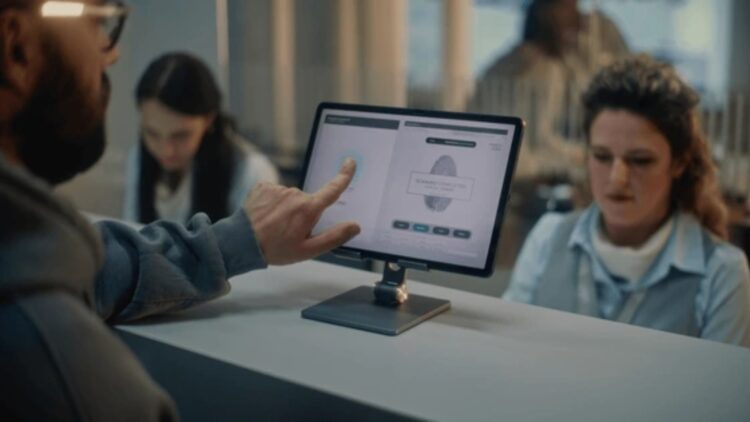
Remember this date: December 26. From this day on, every foreigner who enters or leaves the U.S. will have their photograph taken and their biometric data collected (fingerprints or facial features). This decision comes from the U.S. Department of Homeland Security (DHS) and it’s part of a new plan from the U.S government to have an “integrated biometric entry and exit system.”
The goal is to reinforce national security, avoid frauds with traveling documents, and reduce the number of people who overstay their visas. This will also help identify possible threats and detect mistakes on the information of passengers. So, let’s learn more about this new method.
Taking a photo or collecting biometric data
Until now, the U.S. government collected biometric data only when people entered the country, but with this new rule the process will also be applied when people leave, which represents a great change in border security policy.
The measure will be applied to every foreigner, no matter if they have tourist, work, or temporary visas. Even kids and older adults must follow this process.
Photographs will be automatically taken through facial recognition cameras installed in airports, seaports, and land border crossings. In some cases, it will also collect fingerprints or other biometric data depending on the type of inspection.
According to the DHS, this decision will allow better control over the people who enter and leave the country and will help verify travelers’ identity with more precision.
Worries about privacy
Not everybody agrees with this new policy, some lawyers and civil rights supporters have shown concern about the use of photographs and biometric data, especially about how the information will be handled and how long it will be stored.
Lawyer Kate Lincoln-Goldfinch explained that this measure completely changes the way in which the U.S. controls passengers. She warned that, by doing this, the country is starting a new digital surveillance era that needs more supervision and transparency.
She also pointed out that the government can’t treat every foreigner the same way, each case should be evaluated individually to protect people’s rights.
Why the government defends this measure
The DHS states that the use of photographs and biometric data is a way to improve border safety and avoid frauds or document falsification. In fact, the DHS has been testing facial recognition cameras in different international airports for years. According to official figures, more than 30 million passengers have already experienced this type of control and, thanks to this, authorities have detected thousands of people using false documents or with irregular immigration status.
Safety and privacy
The use of photographs and facial recognition has started a great debate in the U.S. because people who defend privacy say that this technology can make mistakes, especially with certain ethnic groups, and that storing millions of personal data could be dangerous if there are leaks or misuse.
On the other hand, those who support the measure stated that this system will make immigration processes faster, reduce airport lines, and improve accuracy in identifying travelers. They also point out that many countries in Europe, Asia, and Latin America already use similar biometric systems.
What travelers should know
The DHS clarified that foreigners can’t refuse to be photographed or give their biometric data, except for special cases. When it comes to American citizens, they are not obliged to do it, but sometimes their images may be captured accidentally during the process.
So, authorities recommend that travelers review the privacy policies of both the DHS and the Customs and Border Protection (CBP) to understand how their personal data will be managed. What do you think about this measure?