
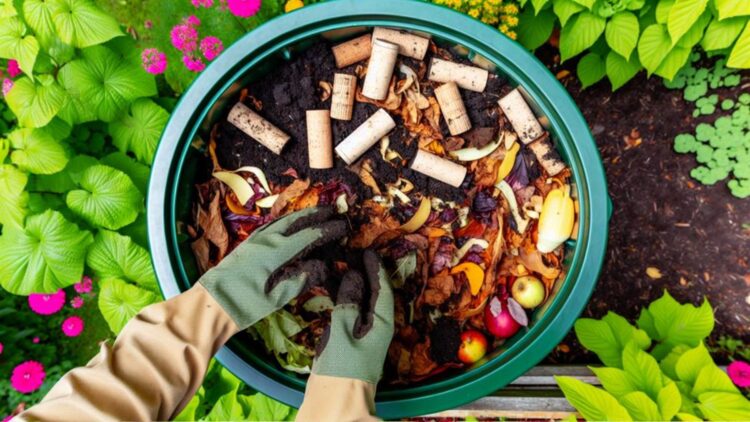
Have you ever seen wine corks in their plants? It might look a little strange at first, but there’s actually a smart reason behind it—and it’s not just to make the plants look cute. Cork can be your saviour when it comes to gardening to help your plants grow healthier, mainly for houseplants or small pots. Let’s see how this works and how you can try it at home!
Why you should put cork in plant soil
Putting corks in the soil of your pots is more than an aesthetic decision, it can also help plants grow better. This trick is used by some people who know a lot about gardening, especially for indoor plants or small pots.
The corks usually used are natural ones, like those that come in wine bottles, and they help in several important ways to care for plants.
What are the benefits of putting corks in plants?
Gardening experts explain that putting corks in the soil has many advantages:
- They help maintain moisture: cork makes the soil not dry out so quickly, so the plant can have water for longer without you having to water it all the time.
- They improve oxygenation of the soil: that means they let air pass better to the roots, which is important for the plant to breathe well and grow healthy.
- They help with drainage: when you water, the cork helps the water drain better and not get stuck. If there’s too much water, the roots can rot, and that’s really bad for the plant.
- They protect against certain insects: corks also work as a kind of natural barrier against bugs that can live in the soil, like compost gnats or small slugs.
How are corks used?
The good thing is that using corks in plants is very easy, and you don’t need to be an expert. There are several ways to use them:
- Whole corks or cut into pieces: you can leave one whole on the surface of the soil or cut them into little pieces and mix them with the soil.
- At the bottom of the pot: you can also put the corks at the base of the pot, before adding the soil. This helps with drainage from below.
Also, this trick is ecological and sustainable. Why? Because you’re reusing a natural material instead of throwing it in the trash, and that helps the environment.
How to avoid mold and bad smells
Even though corks help, it’s also important to follow some care tips so that mold or bad smells don’t appear in the pot:
- Use crushed corks in the soil to keep it well-aerated and prevent too much moisture.
- Put stones or corks at the bottom of the pot. This keeps the water from staying trapped and prevents root rot.
- Don’t overwater. It’s better to wait until the top of the soil is dry before watering again.
- Place the plant in a place with air and natural light, but without direct sun. This helps reduce humidity and prevents mold.
- Don’t leave water in the saucer under the pot. Always pour out the excess water after watering.
- Check the plant often. If you see mold or a bad smell, it’s best to change the soil or let it air out a bit.
- You can sprinkle cinnamon powder or activated charcoal on the soil. Both help prevent mold because they have special antifungal properties.
Other recyclable materials
Besides cork, there are other materials that also help plants and can be recycled:
- Crushed eggshells: they give calcium to the soil and keep slugs away.
- Pieces of charcoal: they help with drainage and absorb extra moisture.
- Dry tea or used tea bags: they have good nutrients for the plant and improve the soil.
- Untreated wood shavings: they keep moisture and protect the surface of the soil.
- Composted fruit and vegetable peels: if you have big pots, this works as natural fertilizer.
Have a go at cork!
As you can see, putting corks in plantsis not just decoration. It’s a practical, simple, and eco-friendly way to take better care of your plants. It helps keep the moisture, drainage, air circulation, and even keeps bugs away. And best of all: you’re reusing something we normally throw in the trash. So if you have corks at home, don’t throw them away… use them in your pots and give your plants a little help!