
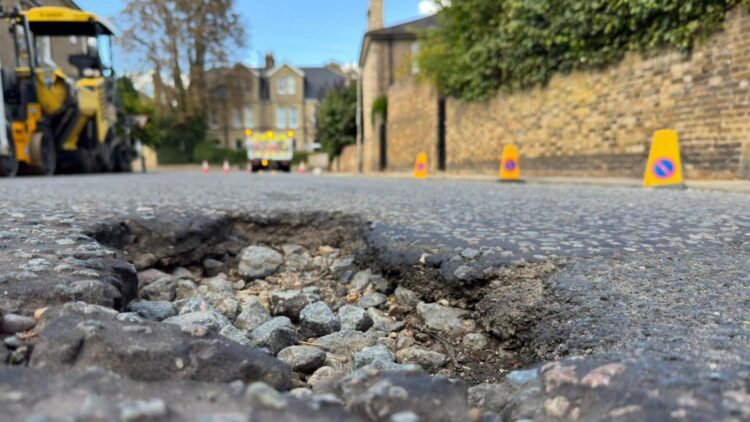
Potholes are one of the main problems on the roads, they are annoying for drivers but also dangerous! Going over a potholone very fast or with a bad angle can damage the car, provoke accidents and even put people’s lives at risk. Even though authorities try to fix this situation over and over again, potholes always show up. Now, in the United Kingdom, a new type of asphalt mixed with graphene is being tested and it could be the definite solution. The first testings indicate that this material could make roads way more resistant and long lasting, significantly reducing the appearance of potholes. So, let’s find out more about this material.
A new type of road in the UK
In 2022, the Essex County Council started a project to test this innovative material and the local authority, known as Essex Highways, made a part of the road with hot rolled asphalt enhanced with graphene. Another part of the road, near the previous one, was built with normal asphalt to be able to compare the results of both materials with the passage of time.
Most of the roads are made with asphalt, a mix of small stones and sticky black substance called bitumen (which comes from petroleum and acts as a glue that holds the stones together). The new material used in the UK is similar, but with the difference that this new one includes graphene (a very thin and strong form of carbon). Even though its production is more expensive that common asphalt’s, testings show that it resists better the traffic, water and climate conditions, according to the BBC.
Potholes
Traditional asphalt wears down as time goes by due to the constant vehicles passing on the road, the rain and the low temperatures. The water can get into the small cracks and when it freezes, it expands and breaks the asphalt apart. After a few months, those cracks end up becoming potholes.
The aim of the new asphalt with graphene makes the surface more long lasting, able to better resist the weight of the traffic, humidity, and temperature changes.
What makes graphene so special?
Graphene is a very interesting material because it’s extremely strong, thin, and flexible. It’s formed by only one layer of carbon atoms arranged in a pattern that gives it remarkable physical properties. Because of its strength, scientists and engineers use it in many industries—from electronics to construction materials.
In this case, graphene is mixed with traditional asphalt to make it more resistant. According to Paul Goosey, the managing director of Eurovia (the company that manufactures the material) they are always looking for ways to improve the products. When they discovered graphene could be mixed with asphalt, they decided to test it in real-world conditions.
Promising results
To measure the material’s durability, Essex Highways installed asphalt with graphene in the part of the road A1016 while on the other side it was used traditional asphalt. After several months, the results were very positive:
- 10% higher stiffness, meaning it was more resistant to wear and pressure from vehicles.
- 20% better water resistance, which helps prevent cracks and reduces the risk of potholes forming in the first place.
Less repairs, more durability
Tom Cunningham, member of the local government responsible for roads and sustainable infrastructures, explained that maintaining 5,000 miles of road from Essex County is a huge challenge. This is why he highlighted the need for looking for innovative ways to make roads last longer, and if the asphalt with graphene keeps showing great results, it could be used in more roads of the UK and even other countries.