
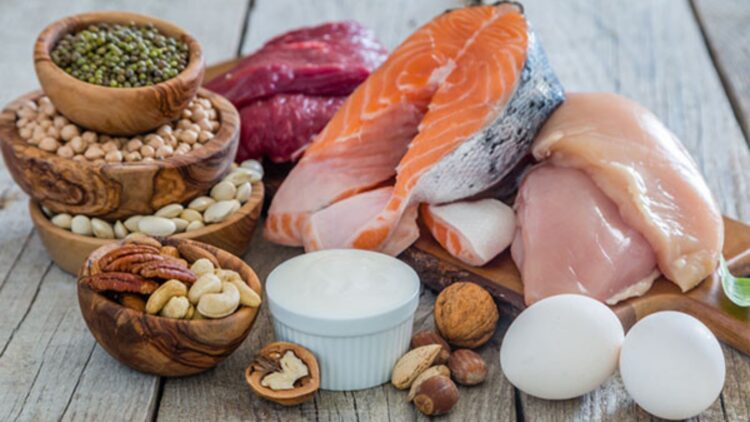
Protein is the queen of all diets. You’ve probably seen people having several eggs with salmon and avocado for breakfast and thought “how can that even fit in a body in the morning?” Well, far from that group of gymbros, there are many people who don’t consume the amount of protein the body needs, and of course, this deficiency shows up as constant fatigue, muscle loss, brittle nails, hair loss… and even hormonal issues like irregular periods. Do any of these problems sound familiar? Then you might also be experiencing a lack of protein, so we’re going to tell you that your diet shouldn’t be dominated by simple carbs, and that especially at breakfast and dinner, you should include enough protein to get through the day.
Protein is key to health
That’s right, it’s not just a macronutrient, our body needs it to maintain and repair tissues, to regulate hormones and it even produces enzymes. At least 10% of your daily calorie intake should come from protein.
How do I calculate that?
Very easy, there’s an equation that will help you:
Multiply your weight in pounds by 0.36: the result shows the minimum recommended grams per day!
Persistent fatigue and tiredness
Do you feel more tired than usual? Lack of protein. That feeling of constant exhaustion is no coincidence. When intake doesn’t cover your body’s needs, it turns to reserves, and that only leads to breaking down muscle and fat to get more energy to carry out your daily activities. And no, it’s not a weight-loss solution, it weakens the system and messes with hormone regulation, that’s why you always feel tired!
Loss of muscle mass
Protein is essential for maintaining muscle, even if you don’t do strength training. Without proper intake, the body can’t repair fibers or keep existing muscle, which leads to loss of strength and muscle tone. And it’s not just for athletes, if you live a more sedentary life… watch out.
Weak hair, brittle nails and dry skin
Keratin and collagen are also present in protein and are essential for healthy hair, nails and skin. You’re not losing hair because of stress, Mary, it’s because you’re not eating enough protein!
Constant cravings between meals
Oh, if you’re one of those who snacks all the time because you’re starving… it’s probably because your plate didn’t fill you up… why? Because it lacked protein! The more protein you eat, the fuller you feel for longer, and that’s because this nutrient helps stabilize blood sugar levels, avoiding what we know as “cravings” between meals.
Learning to eat again
Like we were saying, recent studies recommend eating at least 30 grams of protein at breakfast. A bit of salmon? A high-protein yogurt? Maybe mackerel or tuna (although that’s for the brave, for sure), but you can start by adding some legumes or nuts, and you’ll definitely start noticing the change!
Can you give me an example of a day’s diet?
Of course, let’s prepare a high-protein menu together so you can get your protein in. You don’t need to do it all on the same day, but you can start adapting it to your daily diet!
Breakfast (approx. 30 g of protein):
- Omelet with 3 whole eggs, sautéed spinach and mushrooms, with 1 slice of whole-grain bread.
- 1 plain Greek yogurt (150 g) with 1 tablespoon of chia seeds.
Mid-morning (approx. 15 g of protein):
- Protein shake (25 g powder) mixed with unsweetened plant-based milk and a handful of berries.
Lunch (approx. 40 g of protein):
- Grilled chicken breast (150 g) with chickpea salad, tomato, cucumber, pepper and olive oil.
- A small portion of quinoa (60 g cooked) as a side.
Afternoon snack (approx. 12 g of protein):
- 2 slices of whole-grain bread with 80 g canned tuna in water and avocado.
Dinner (approx. 35 g of protein):
- Grilled salmon (150 g) with steamed zucchini, broccoli and carrot.
- Lentil salad (60 g cooked) with red onion and parsley.
Lack of protein doesn’t just affect physical performance, but also hormonal health, immunity and overall wellbeing, and we don’t want that! Time to change our diet and get strong!