
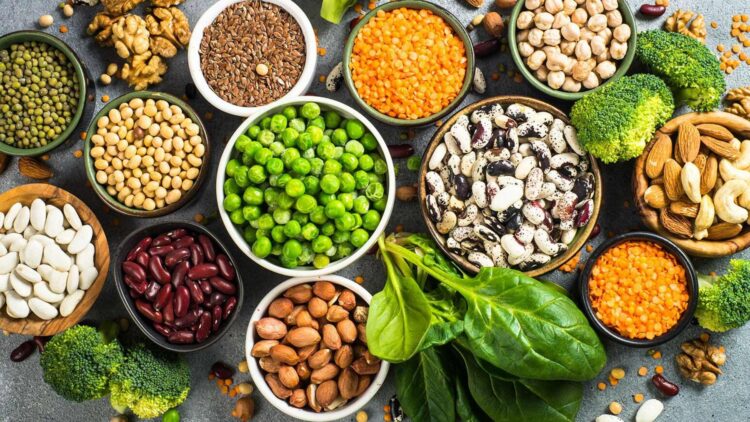
You do not need to eat meat every day to have enough protein (and your body will thank you). Yes, friends of protein and gymbros, you are not going to run out of protein in your body if you do not eat meat for a couple of days, it is not necessary.
In fact, abusing animal protein, especially if it comes from industrial farming, can do you more harm than good.
What happens if you abuse proteins?
There are studies that suggest that excess red meat can cause more inflammation in the body, make you age faster and even increase the risk of chronic diseases. One of the culprits seems to be a sugar molecule found in red meat, called Neu5Gc. Your body detects it as something strange and, instead of integrating it into its nutrients, it attacks it. That generates an immune response that can keep you in a state of constant inflammation without you realizing it.
Obviously, any major change in your diet should first go through medical consultation. But if you are looking for alternatives, plant protein can be a great option. So, we are going to tell you which plant proteins can have positive effects on your health so you do not consume so much red meat. Shall we?
Lentils
Of all the legumes, lentils are our favorites. They have a lot of protein and, in addition, fewer calories than many others. They are also loaded with resistant starch and prebiotic fiber, which feed your microbiota and improve your intestinal health.
Our tip: if you soak them or cook them under pressure, you reduce lectins, substances that can hinder the absorption of nutrients! In addition, you can eat them in stew, in salad, and even in burgers!
Hemp protein
Hemp seeds are one of those few plant sources that contain the nine essential amino acids, which makes them a complete protein.
They also provide omega-3, magnesium and fiber very beneficial for the intestine. Of course, look for hemp protein that is organic, cold-pressed and with no added sugars.
Barù nuts
You may not know them, but Barù nuts have more protein per serving than almost any other nut. They are rich in antioxidants, have fiber and that crunchy touch that hooks. They go great as a snack or as a topping for a good salad, enjoy!
Spirulina
This blue-green algae is one of the most protein-dense sources that exist (by weight, it has almost 70% protein). It provides iron, B vitamins and a very powerful antioxidant called phycocyanin, which helps the immune system and the brain, and you can add it in powder form to smoothies or juices. And if you do not like its taste, chlorella is another similar algae, available in powder or tablets.
Flax seeds (linseed)
Flax seeds are not usually on the list of superfoods, but they should be. They are a great source of plant protein, omega-3 and lignans, compounds that help balance hormones. But: if you take them whole, you are not going to absorb their benefits. You have to take them ground.
Sorghum
This is a grain rich in protein, used many years ago. It has a mild flavor, a little sweet and with a nutty touch. One cup has 21 grams of protein, twice as much as quinoa!! And three ounces of sorghum have more iron than a steak. You can use sorghum flour for gluten-free baking or look for it in pasta version if you want a plant-based meal with high protein content.
You see that you do not need meat every day to be well nourished. There are many plant options with high protein content, additional health benefits and a much lower impact on the planet. Trying them costs nothing… and your body (and your digestion) may feel wonderful.