
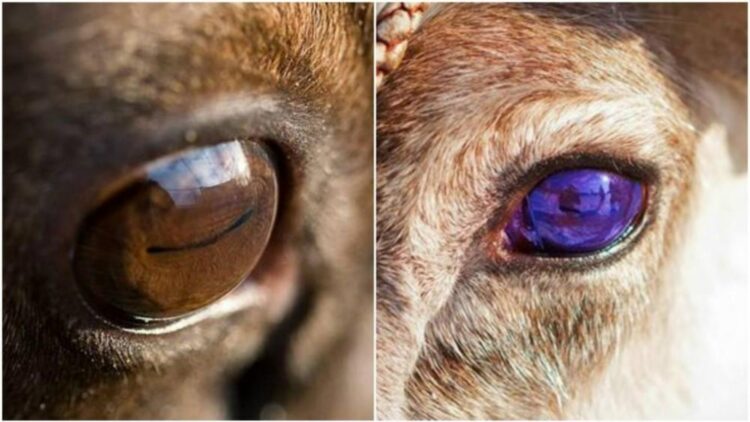
Biology sometimes seems like magic, but when winter arrives in the Arctic and daylight disappears, reindeer eyes change color, literally. Where in summer they shine in golden, greenish or brown tones, in winter a deep, very intense blue appears. It is not aesthetic, of course, it is an adaptation they make in order to survive when there is no light. It seems strange to us, right? But that is biology and the adaptive capacity of animals.
Living entire months without sun
The Arctic winter is not just cold. When it arrives, it also brings darkness, entire weeks without sun and only a very faint, bluish light. And of course, reindeer, like other animals, have to live their normal lives, look for food, move around, avoid danger and above all, detect wolves. How do they do this when they can barely see? By modifying their eyes.
The trick is not in the color
As you might imagine, the change does not happen in the iris, even though that is what changes color, but in an internal layer of the eye called the tapetum lucidum, which acts like a mirror, reflecting light back onto the retina. This is the same reason why cats’ eyes shine in the dark.
Winter mode activated
In summer, when the sun does not set for weeks, the reindeer’s tapetum reflects golden and greenish tones. But when winter arrives and blue light dominates the landscape, that internal layer reorganizes and begins to reflect blue light. This makes the world much brighter for the reindeer, up to a thousand times brighter than for us.
They see worse, but exactly what they need
Of course, not everything is perfect. Their vision loses sharpness, as if they were looking through slightly fogged glass. But they don’t need to read small letters. What matters is movement. They need to detect movement across the snow. For that, this “less sharp” vision works just fine. Better to see blurry than not see at all, right?
Like changing tires, but in the eyes
The explanation is almost mechanical. During winter, reindeer pupils remain dilated, which changes the pressure and fluids inside the eye, modifying the structure of the tapetum.
It is not permanent
Of course, when spring returns and the light gradually comes back, reindeer eyes recover their original color, golden again, as if nothing had happened. It is a seasonal change perfectly synchronized with the environment. Impressive.
A unique case in the animal kingdom
So far, no other mammal has been documented to change its visual system in such a radical seasonal way, so reindeer are an exceptional case. Could they be the key to researching how to improve night vision? And could we adapt human vision to low light conditions?
Evolution in search of survival
Many people thought that the changes seen in some species were merely aesthetic, but the reality is that everything has an explanation and, above all, a function. When the world becomes dark and hostile, sacrificing a bit of sharpness in exchange for sensitivity is a very good move. Reindeer survive winter because they transform for it. Is that not incredible?