
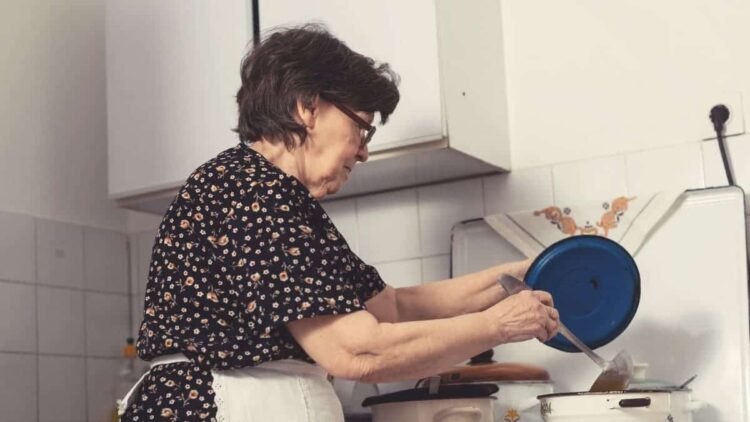
We are all looking forward to retirement, right? Every day is one less day for that long-awaited moment when you do not have to set the alarm to go to work, but… There is another side to retirement, that of the millions of women who reach old age without their own income after a whole life working at home or in family businesses without contributing enough to receive a decent pension. This is happening in Spain, but many countries unfortunately are following closely.
The system distinguishes between contributory and non-contributory pensions, but many did not even claim their rights because they did not know they could. The result is that these women depend totally on their husbands and that makes them more vulnerable. And they are not few, they are entire generations. Let us tell you the case of Ana, 87 years old, retired but without a pension in her name… how does she survive?
A life of work, but without own income
Ana spent decades helping her husband in an office in Barcelona and later in Almería. She never regularized her work situation, never asked for a pension. Today she lives only from what he earns, a retired lawyer who always managed the household finances.
“He collects from pensions… I do not, not a cent,” says this elderly woman, even so she assures that she lacks nothing: her husband managed savings well and always made sure there was what was needed at home.
The invisible work
Ana’s story is that of thousands of women who worked without being recognized, whether in family businesses, in the countryside or dedicated themselves to the house, but without contributing to Social Security. The result is a huge gap where husbands have contributory pensions and they depend on that pension or, in the best case, access a minimal non-contributory benefit that barely covers the basics…
The gender gap in pensions
In Spain, women’s pensions are on average 30% lower than men’s, and many of them do not even have their own benefit. Behind it is the same pattern: decades of gender roles that relegated women to caring for children, the home and the elderly, without the opportunity to contribute regularly, so that later they say feminism is not necessary!
“I live well, but I depend on my husband”
Ana admits that her situation is comfortable because she shares accounts with her husband. “I have my card, if I want I go and withdraw money, but it is not something I like, I would like to put money in,” she says half joking, because she depends on him for absolutely everything, in her generation it was normal.
“Life I see expensive for people who have to fend for themselves without anyone contributing anything. I do not know how they can manage, and even more if they have children or elderly parents.”
The message for new generations
Ana is clear that the only way to ensure independence is to work, she urges today’s women and girls to study a lot, to have a career and their own conditions to get ahead, so they can look to the future differently.
A pending challenge
The social debt with the women who dedicated their lives to “invisible work” is a reality, in this country and in all. These women need protection because they never had a pension and now, the State needs to ensure this does not happen again with the new generations.
And the debate should not only focus on figures, but also on gender equity, they have been millions of women who historically had to put their lives on hold to work at home, is that not a job? Raising a whole family, making sure everything was ready, taking care of everyone… Not a cent of pension do they deserve for years they dedicated to others and not to themselves?