
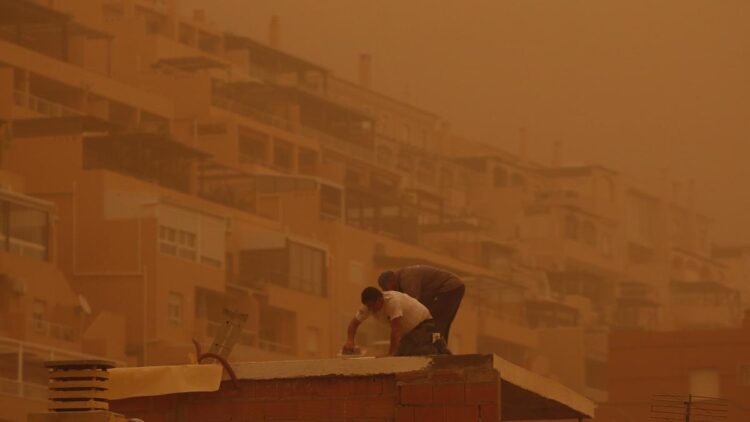
A golden cloud is approaching, dust from the Sahara (can we even locate it on the map?). Well, sand from this incredible African desert is going to reach our country, making the Southeast of the United States look just like a scene from a Wild West movie. Skies tinged red and sunsets straight out of Star Wars… but also a risk to health, because it’s dust in the air! It rarely arrives with such force, it’s true, but this year, climate models indicate that the Saharan Air Layer is coming in strong… and with a lot of particles, so asthmatics, brace yourselves!
What is a Saharan dust cloud?
Let’s put it in perspective: the Sahara, the largest desert in North Africa (and maybe the world? We’ll have to ask ChatGPT), has stirred up an Air Layer (a mass of extremely dry air that carries with it very fine particles). Every year, the trade winds push this air mass westward, and this year they’ve pushed it harder than ever, covering the 8,000 kilometers between North Africa and American lands… isn’t that incredible?
What is the cloud made of?
It’s made up mainly of minerals, organic remnants, and microscopic dust. The cloud can reach up to 4 kilometers thick, which is… not a small amount. Its reach is so wide that the first affected regions have been Caribbean islands like Puerto Rico, Barbados, Jamaica, and Trinidad and Tobago, where the air has already become denser and drier.
Respiratory consequences
Yes, it’s a visual spectacle, we won’t deny that… but a warning to those with allergies, asthma, or other respiratory conditions, because you’re especially vulnerable to these microparticles from the Sahara.
Why? Because they can penetrate the lungs and worsen any conditions you already have. If an asthmatic already has trouble breathing normally… imagine adding a huge, dense cloud of dust on top of that!
What do the experts recommend?
Health authorities advise avoiding prolonged exposure to the outdoors and, on the days with the highest concentrations, using masks to reduce inhalation of dust, much like during the pandemic. They also recommend keeping windows closed to prevent the dust from entering homes.
Our tip of the day is that, if you feel there’s a lot of dust at home but don’t feel like mopping because it’s late, you can spray a little water (just a little, no need to summon Nessy) on fabric surfaces (the couch, the bed…) to help reduce the amount of dust in the air. You’re welcome!
Unexpected climatic effects: more than just a visual phenomenon
Paradoxically, the arrival of the Saharan dust cloud doesn’t just bring risks, but also a potential break from other extreme weather. The NOAA (National Oceanic and Atmospheric Administration) explains that these clouds can inhibit the formation of hurricanes, as the dry air and particles scatter the moisture that fuels these systems.
Watch out for visibility…
At its densest point, the cloud will reduce visibility in states like Florida, Louisiana, Alabama, and Mississippi. There will also be a slight increase in nighttime temperatures, as the suspended dust particles absorb some of the heat during the night.
When and where its effects will be felt
According to weather models, the cloud will reach the mainland between Wednesday and Thursday. On those days, the skies will turn a reddish hue, creating unusual sunsets but also affecting air quality. These particles may remain in the air until Saturday or Sunday, so don’t get too comfortable!
Isn’t it incredible? An almost transoceanic journey… a cloud that connects two continents… and the asthmatics and allergy sufferers from both!
Get your camera ready if you’re into photography, because you’ll rarely feel like you’re in Tatooine!