
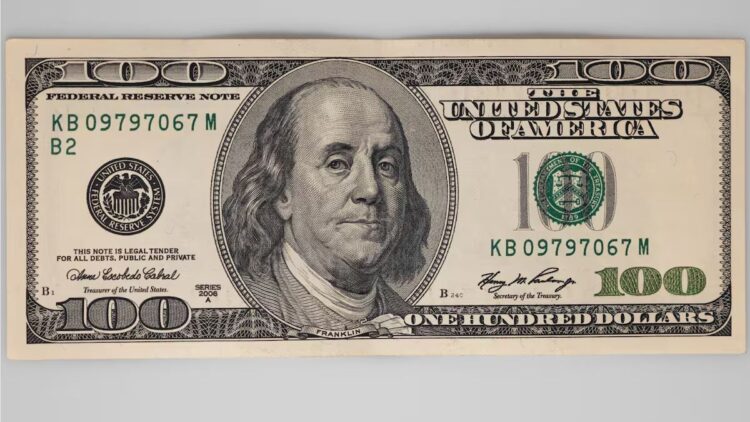
Even though 100-dollar bills are the most often used piece of cash, paper money is about to change. There is growing concern about the future of physical currency as the globe moves more and more toward digital payment methods. The advent of digital currencies and shifting consumer behavior have sparked recent discussions about the possibility of discontinuing this iconic bill. With certain upcoming adjustments, the $100 note is here to stay for the time being.
Americans will have to say goodbye to these dollar bills after decades
Together with the Secret Service and the Advanced Counterfeit Deterrence (ACD) Steering Committee, the Federal Reserve (Fed) and the Bureau of Engraving and Printing are enhancing identification and adding security features. The present goal is to maintain the currency’s monetary worth and protect its meaning. The $100 bill, which prominently features the portrait of Benjamin Franklin, a statesman and scientist who is considered to be one of America’s most beloved figures, is currently the largest denomination in the country.
One of the most well-known individuals connected to the United States is Benjamin Franklin. He created the lightning rod in addition to being one of the founding fathers and contributing to the writing of the American Declaration of Independence. According to reports from the Bureau of Engraving and the Federal Reserve, as well as information from the Secret Service and the ACD, the revised 100-dollar bills are anticipated to go into circulation in 2034 or 2038. Over the years, the value of the US dollar bills has fluctuated. Most notably, since its creation in 1876, George Washington has remained featured on the one-dollar bill.
Alexander Hamilton established the Bank of America in 1791, which is when dollar bills as we know them initially appeared on the market. 100-dollar bills will undergo their fourth redesign in the last century with their new design. 2013 saw the release of the latest one. The decision to feature Franklin on the front of the note symbolizes the American dream, which is reflected in Franklin’s life narrative of rising from poverty to wealth.
What will be the future of dollar bills in a digital economy?
Many people question whether cash will still be used in banking as open and cashless banking continues to grow. Apple Pay and other digital payments are becoming more and more popular every day as a way to make purchases safer and easier. However, some people would rather store their money in cash since they don’t trust online banking. Since cash has been a mainstay of financial transactions for a long time, not everyone would just give it up.
Because they value efficiency and speed, younger generations are especially drawn to the convenience of contactless payments, mobile wallets, and cryptocurrencies. Accessibility, privacy, and security are significant concerns raised by this change, particularly for those who depend on cash, such as elderly people, people living in rural areas, and even unauthorized immigrants in the nation. As the government investigates the possibilities of central bank digital currencies (CBDCs) and the need for cash keeps decreasing, physical currency’s place in our economies may change dramatically, possibly reducing its influence in the financial system. In the end, cash might not completely vanish, but in the years to come, its role and importance might drastically shift.
Ultimately, we must begin planning for a future in which online payments are commonplace. You must stay alert when using online banking because new cybersecurity dangers will undoubtedly surface during this procedure. Although the $100 note is here to stay, the adage “cash is king” is no longer true. In the event of an emergency, you should still consider keeping some cash on hand.