
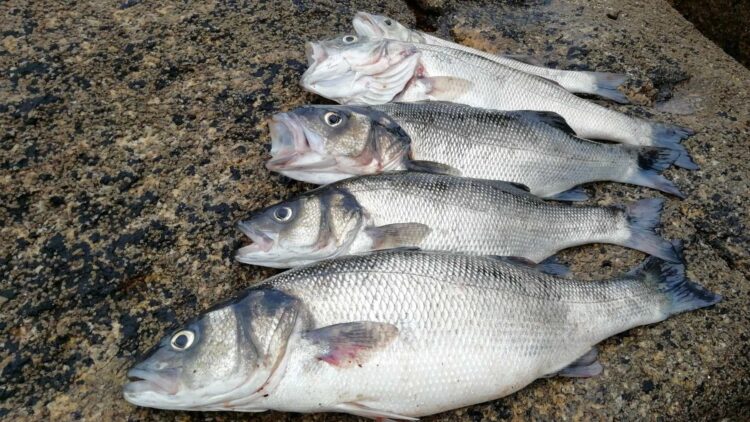
If we made a list of random things, raising sea bass on the Moon might make the podium. But this isn’t a joke, it’s not something we made up. While many people are still dreaming of eating gourmet food on Mars, some scientists in France are raising sea bass in a fish farm with the goal of sending their offspring to the Moon.
If we told Armstrong that years after surviving on freeze-dried food during his space mission, someone would propose sending live sea bass to the Moon, he’d probably think the people at the European Space Agency (ESA) had lost it. But no, they haven’t. The French CNES wants to make fish the main source of protein for future space colonies.
Far-fetched? Yes. Logical? Maybe also. The idea is to guarantee fresh, nutritious, and especially sustainable food in places of extreme isolation. The project is called Lunar Hatch and it has been launched in Palavas-les-Flots. We’ll tell you everything!
Sea bass for dinner on the Moon
Yes, we know you’re in shock. This project, Lunar Hatch, is not just trying to see if fish survive in zero gravity. It goes a little further and aims to create a self-sufficient and especially sustainable fish farm to feed astronauts on the Moon so they won’t rely on shipments from Earth.
But why sea bass?
Believe it or not, this animal wasn’t chosen by chance. Sea bass have a great nutritional profile, they’re easy to digest, rich in omega-3, vitamin B, and essential proteins needed to maintain muscle mass, which is crucial in microgravity conditions where muscles tend to weaken more easily.
But the challenge isn’t just raising fish, it’s doing so in a closed ecosystem that doesn’t generate waste, can recycle water, and sustain life autonomously for several months. According to estimates, to feed seven astronauts with two portions per week, about 200 active sea bass would be needed in that system.
From the lab to orbit (and then to the Moon)
This research is currently in its early stages, of course. But the goal is to send fertilized eggs into space, study their development, and determine if they can survive, hatch, and grow in zero gravity. The first tests will take place on the International Space Station (ISS), where their evolution will be monitored before attempting to replicate the process on the Moon.
Once their behaviour is analyzed, these frozen eggs could become the first step toward a lunar sea bass farm. Instead of feeding astronauts dehydrated crickets or gelatine cubes (like during the Apollo missions), the menu could include fresh sea bass with freeze-dried rice. Sounds much better, right?
Why hasn’t this been done before?
The history of fish in space isn’t new. In 1973, NASA took some small mummichogs aboard an Apollo mission. And in more recent years, zebra fish have helped study muscle atrophy in microgravity. But fish had never been raised with a long-term sustainable and food-related purpose.
What makes Lunar Hatch different is that it’s not about basic science, but long-term survival. To establish stable human colonies on the Moon or Mars, it’s not enough to recycle air or grow lettuce. Animal protein is needed, and fish seems like a viable and nutritious option.
And if it works?
If the results are positive, Lunar Hatch could mark a turning point in space nutrition. Not only would it allow astronauts to diversify their diet, but it would also help develop self-sustaining ecosystems outside Earth. And of course, they’re already talking about future missions to colonize Mars.
Even though there’s no concrete date yet for the first shipment to the Moon, the scientists are confident. The experiment on Earth is already underway, the eggs will soon travel to the ISS, and if everything goes well, the first lunar sea bass could be born before the end of the decade. Space fish, what do you think?