
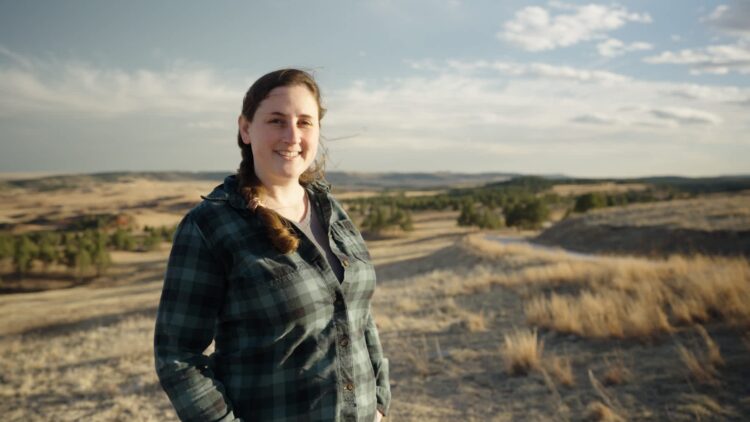
A job can change someone’s life, and that’s exactly what happened to Sarah Myers–a 33-year-old woman who went from earning $15 per hour to $92,100 in the last year. Her job as a forester has allowed her to have a stable life doing what she loves: protecting forests, managing trees, and helping during wildfires.
I’m sure you are curious about how Sarah changed her life so much, so let’s get started!
How Sarah got her ideal job
Sarah grew up in Vermont and New York, surrounded by nature. Since she was a child, she spent every summer camping, canoeing, and hiking with her family in the Adirondacks. Because she loved nature so much, she always knew she wanted a career working with land and forests.
So, she studied land management at Cornell University and later earned a master’s degree from Penn State. During her studies at Cornell, a mentor gave her very important advice: To get a permanent federal job in forestry, she would need six to eight years of seasonal work first.
And that is exactly what happened.
Hard times of seasonal jobs
Between 2013 and 2017, Sarah worked in 5 seasonal jobs, each one of 4 to 6 months of duration. She worked in the northeast of the U.S., the northern Great Plains, and even Alaska during the winter. She earned around $15 per hour and did tasks such as measuring tree species, height, and age.
However, seasonal work was very difficult for these reasons:
- She never stayed in one place for long
- She lived out of suitcases
- She had no permanent home
- She moved constantly, using only what fit in her car
Sarah says, ‘’Seasonal work is hard because you’re not settled anywhere.’’ Still, she kept going because she wanted a long-term career in forestry.
Full-time forester position
In January 2018, after years of effort, Sarah got her first permanent job as a forester in Colorado. Then, in September 2022, she received a promotion to supervisory forester, which uses everything she learned over the years. Her daily tasks include:
- Planning budgets and projects for planting trees
- Helping young trees stay healthy
- Managing commercial timber sales
- Tracking wildfires, firefighters, and supplies during fire season
Sarah says that this position seems like ‘’the perfect job’’ because it combines her entire experience and her love for forests.
How much she earns
Her income changes every year, for example, in 2024 she earned:
- $77,390 in base salary
- $14,710 in overtime during fire season
- Total: $92,100
She has lived in Hot Springs, South Dakota, with her partner since 10 years ago. Her partner also works for the federal government and receives a similar income as Sarah does.
Sarah’s expenses
Now, what does she spend her money on? Let’s find out:
- Food: $1,360
- Housing & utilities: $1,200 (her half of the mortgage, taxes, insurance, utilities)
- Discretionary spending: $1,167 (travel, entertainment, home goods, clothing, pets, work supplies, etc.)
- Savings & investments: $1,052
- Insurance: $531
- Gas: $119
- Phone: $97
- Subscriptions: $11 for HBO Max
One unusual expense that month was $440 for Apple Music, because she still uses iTunes and bought a lot of songs.
Sarah and her partner bought a house in 2022 for about $300,000. She paid the $65,000 down payment with her savings and an inheritance. They use a joint account for house costs, and Sarah contributes $1,200 a month — a little more than her partner so that the account always has extra money just in case.
Sarah also has:
- An emergency fund with $5,900
- A high-yield savings account with $15,880 (for her next car)
- A retirement account with $79,380, where she saves monthly
Financial concerns and job security
Although the couple live well, inflation has made saving money for big things a bit complicated. They can pay for their house and the bills, but it’s hard for them when it comes to vacations or big purchases.
Sarah is also worried about the recent changes on the federal government because they could affect their jobs. Even nonprofit or state land-management jobs rely on federal funding, so they don’t have a strong safety net if something happens.
Sarah’s future dreams
The couple is already thinking about what they would like to do next year, and their main financial goal is to be able to retire earlier and have a second professional project.
Sarah’s dream is to go back to the northeast of the country and have a small business making maple syrup, something she did as a child for fun.
So, her story shows that constant effort can lead to a solid and meaningful career. And even though she still faces economic and job challenges, she continues to dream of a future where she can combine her love for nature with a small business of her own.