
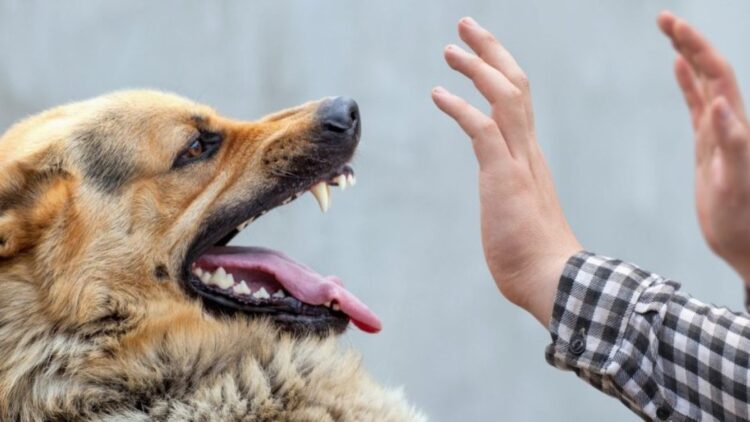
Many dog owners believe their pets can notice things humans can’t, as if they had a ‘’sixth sense’’. One of the most common beliefs is that dogs can identify ‘’bad people’’ depending on how they react when they see a person. However, the question is: is this a proof of a special power or there is another explanation? Experts suggest the truth is simpler that it seems. So, let’s see if dogs have this sixth sense.
The truth behind dogs’ sixth sense
According to dog trainer and behavior consultant Adrienne Farricelli, dogs have a supernatural sixth sense. What happens is that, after thousands of years living with humans, they have developed an incredible capacity to read our social signs, our body language, our face expressions, and even our voice tone.
This explains why they react in a different way with certain people. Farricelli speaks about the concept of ‘’emotional contagion’’: if someone behaves strange or nervous, the dog notices it and reflects that energy. What seems like a sixth sense, it’s actually a natural sensitivity of dogs toward human signs.
Smell and the sixth sense
The extraordinary smell of dogs is also important in this alleged sixth sense since they are capable of detecting changes in human hormones, like cortisol which is known as the stress hormone. If a person has high levels of cortisol because they are nervous, the dog will notice it and it will react with caution.
However, Farricelli clarifies that it’s not always the stranger on the street who creates this tension, sometimes the owner is the one transmitting that nervousness. When the person that walks the dog is worried or anxious, the dog feels it and reflects that emotion. Once again, it seems like it’s a sixth sense, but the truth is that it’s a reaction to what they notice in their surroundings.
The past of the dogs influence in their reactions
Not every dog reacts the same way, and part of these differences come from their past experiences. Farricelli explains that socializing when they are puppies (between week 3 and 14) is crucial, because a dog that can’t be exposed to different people and situations during that period can react with fear or suspicion toward what they notice as ‘’unusual’’.
Another factor is generalizing: if a dog had a negative experience in the past, it can relate it to similar people and objects in the future. For example, if someone with a cane scared a dog one time, the animal can react with fear toward anyone who uses a cane. The same can happen with certain types of clothes or behavior. So, what seems like a sixth sense can simply be a memory linked to past experiences.
Based suppositions, not magical powers
Then, can dogs really see ‘’bad people’’? The answer is more practical than magic: dogs don’t have a supernatural sixth sense, but they do have unbelievable skills:
- They mirror the emotions of people around them.
- They can detect stress hormones through smell.
- They reflect the mood and feelings of their owners.
- They learn from past experiences and generalize them to new situations.
These skills make us think dogs know how to distinguish between ‘’good’’ and ‘’bad’’ people, but they just react to the signs we don’t notice ourselves.
Final word on dogs’ sixth sense
Farricelli concludes that “until the day dogs can talk, we’re left with educated guesses.” Their behavior may sometimes look like they are picking up on “bad vibes,” but there is no evidence of a supernatural sixth sense. Instead, their reactions are grounded in their social learning, their powerful noses, and their natural emotional sensitivity.
Dogs might not literally possess a sixth sense, but their talent for picking up on emotions, scents, and subtle cues is remarkable. For most owners, this heightened awareness feels just as extraordinary — and often more trustworthy — than any mystical explanation.