
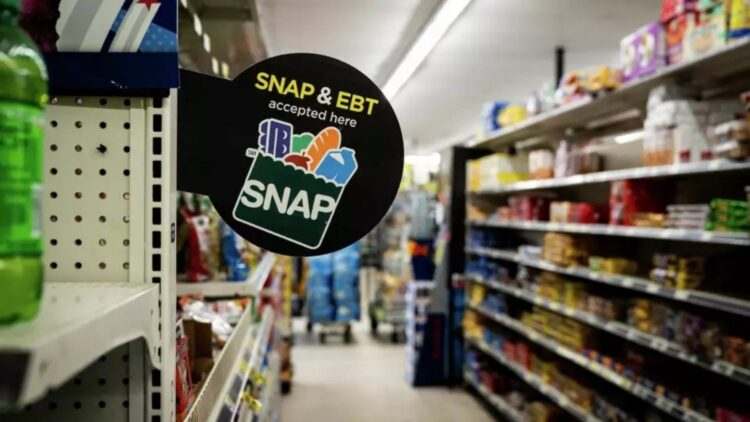
The SNAP (Supplemental Nutrition Assistance Program) is a benefit from the U.S. government that sends money every month to low-income families to buy food. This program is led by the U.S. Department of Agriculture (USDA) and it benefits millions of families in the entire country.
From November 1 of 2025, there will be new national rules implemented for some people who receive SNAP. These rules make it harder to keep benefits if people are not working or taking part in activities approved by the government. The USDA confirmed that every state must apply these new requirements. So, let’s learn more about these new rules.
Who is affected by these new SNAP work rules?
The new rules will be applied to those ‘’Able-Bodied Adults Without’’ (ABAW), which include:
- People between 18 and 64 years old.
- People with no children nor anyone who depends on them.
- People who are not disabled and are physically or mentally able to work.
Basically, if you are an adult who can work and don’t look after any children or family members, the new SNAP rules will directly affect you.
What changes in the SNAP rules?
Until now, many states had the possibility to grant waivers or special permissions that allowed people to keep receiving SNAP benefits, even though they didn’t work. This could happen if, for example, there were few job opportunities in a certain sector or if the state decided to apply time limits.
Now, from November 1 of this year, that will change for good. The USDA and the Food and Nutrition Service (FNS) will end the transition time and will oblige every state to follow these points:
- Time limit: people who don’t work or don’t take part in programs approved by the government could only receive SNAP for 3 months every 36 months (3 years).
- Work or training requirement: to keep the benefits, it will be required to work, train or do community service at least 80 hours per month.
- Verification: states must document and verify working or participation hours of each beneficiary.
- Limited exemptions: states will have to justify in a detailed way each case in which a person is exempt and can no longer use large ‘’geographic exemptions’’ to excuse entire areas.
In practice, this means more adults with no children will be studied under the ABAWD rules, and will have less flexibility to preserve their SNAP benefits if they don’t meet the requirements.
Who won’t have any problem?
Not every person who receives SNAP benefits will lose or have their benefits modified. People who will continue being exempt to the new rules are the following:
- Pregnant people.
- Disabled people, or the ones who have a medical certification that indicates they can’t work.
- Primary caregivers of children or dependents.
- People with a valid reason or ‘’just cause’’, such as illness, emergencies, or other special circumstances.
States will also preserve a limited number of discretionary exemptions that they could use case-by-case. However, every use must be documented and justified with detail.
Before November 1
This date will mark the end of the adaptation period. By then, every state must have their systems updated, notifications sent, and tracking tools ready to check working or participation time.
What’s more, the USDA will remove the temporary quality control waiver, so any mistakes by the states when applying the rules will once again count in federal audits. As you can imagine, this will increase the pressure over state agencies to follow the rules with precision.
Possible delays
Some states, like Pennsylvania, have warned about possible delays on SNAP payments in November if Congress fails to approve federal funding in time. The USDA explained that, if there is a government shutdown or lack of funding, there won’t be enough money for the entire month, which could cause interruptions right when the new rules start.
Social and political impact
SNAP changes have generated a debate in the entire country. Those who support the measure say it encourages self-efficiency and protects the program resources. However, those who criticize it express that it can exclude vulnerable people who want to work but they face difficulties due to lack of transport, capacity, or available jobs.
One way or the other, November 1 will be a key date that will mark a structural change of SNAP with: a stricter system, less exemptions, and higher federal control over the states. All of this will have direct consequences for millions of adults who depend on this food aid in the U.S.