
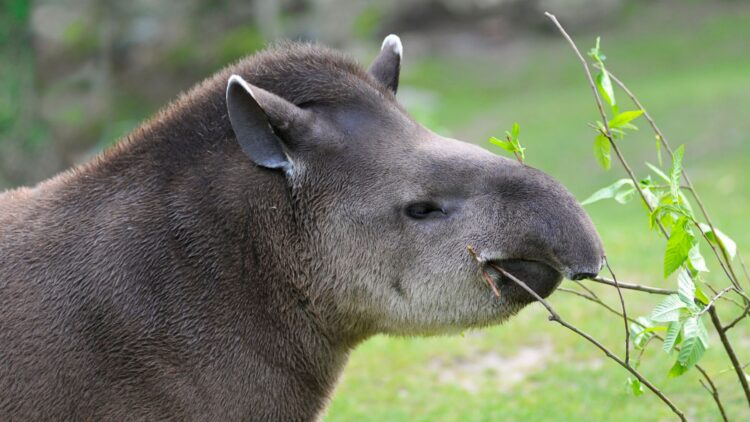
The history of biodiversity is full of surprises. Over the centuries, numerous species have been classified as extinct due to lack of sightings or the destruction of their habitats. However, sometimes, nature reminds us that it still holds unexpected secrets… the resilience of life. And after 100 years without confirmed records in the area, the Cameras of the State Institute of the Environment of Rio de Janeiro (INEA) have captured a surprising moment: the reappearance of the South American tapir (Tapirus terrestris), the largest terrestrial mammal in South America, in the Costa Verde region.
An unexpected return
It had been a century since the last documented sighting of this species in the region, dating back to 1914, when it was seen in the Serra dos Órgãos National Park. Since then, the advance of urbanization and uncontrolled hunting pushed it to the brink of local extinction… For many decades it was believed to have disappeared, but new images and videos captured in the Cunhambebe State Park (PEC), a biodiversity sanctuary of 38,000 hectares, show three tapirs walking through the vegetation of this State Park, including a mother with her baby.
What is the Cunhambebe State Park (PEC)?
It is a hidden natural jewel in the state of Rio de Janeiro, Brazil. Hectares of pure biodiversity, it is a sanctuary where the Atlantic forest unfolds in all its splendour, protecting species that are not seen in any corner of the world.
It was created in 2008 and covers the territories of Angra dos Reis, Rio Claro, Itaguaí and Mangaratiba. Its name pays homage to Cunhambebe, a legendary Tupinambá indigenous leader who fought against the Portuguese colonizers in the 16th century.
Beyond its ecological wealth, the park is a refuge for endangered animals and a place where science continues to find surprises, such as the reappearance of the tapir!
A triumph for biodiversity conservation
The reappearance of tapirs has been possible thanks to the conservation efforts of INEA and the Vale company, which strategically installed cameras to monitor wildlife. This is a clear example that habitat protection programs are working perfectly.
What are tapirs?
They are robust mammals with short legs and a rounded body, with a kind of flexible trunk that makes them unmistakable. Some say they look like a cross between a pig and a miniature elephant, but they are actually closely related to rhinos and horses.
Tapirs are the gardeners of the jungle: as they walk through the thicket, they eat fruit and then spread the seeds with their “natural fertilizers,” helping to regenerate the forests. They are shy, nocturnal and very stealthy creatures, which has earned them the title of masters of camouflage.
Protected species but still at risk of extinction
Although this discovery is great news, South American tapirs remain in danger, because the reasons that led to their “disappearance” continue to exist: deforestation, urban expansion and poaching
What is the impact of this animal on the ecosystem?
This mammal, which can weigh up to 250 kilos, not only helps regenerate the forest, but is also an indicator of the health of the ecosystem. When these little animals wander through the forest, their robust paws create natural paths that allow new plants to grow (because when they step, the footprint is quite deep and allows light to reach the ground). Basically, it is as if they were shaping the landscape as they please! In addition, they are part of the food cycle of predators such as jaguars and pumas, helping to maintain the balance of the food chain.
The reappearance of the South American tapir is proof that nature can recover if given adequate protection, and is great news for the conservation of the Atlantic rainforests!