
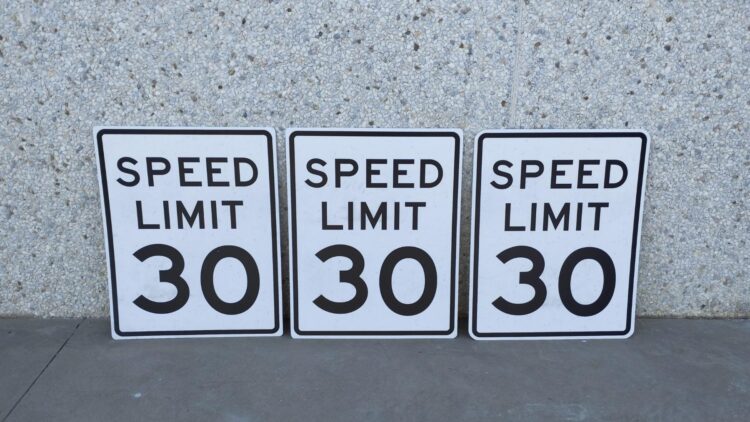
Speeding could land you in jail. That’s right, in Connecticut they’re getting very serious about speeding, so much so that if you get caught driving over 160 km/h (which is about 100 mph), you won’t just get a painful fine: you could also end up behind bars. Yes, just like that. A new bill, which, by the way, was unanimously approved by the House of Representatives, proposes penalties of up to $1,000 and jail time for those who keep pressing the gas as if they were on a racetrack, you’re not Lewis Hamilton, George. It still has to go through the Senate, but everything points to it moving forward.
And no, it’s not an isolated case. It’s part of a trend that’s spreading across several U.S. states, where there’s less and less tolerance for reckless driving, and that’s how it should’ve always been! The idea is no longer just for the offender to pay, but to understand that acting smart behind the wheel has more serious consequences. Even if you have money for the fine!
Main goal: save lives
The data speaks… and it’s chilling. According to the NHTSA, excessive speed is behind about 12,000 deaths a year in the United States. That’s roughly one-third of all traffic fatalities. And while not all reckless driving has to do with speed, it’s almost the main cause of the accidents that happen.
Think that the faster you go, the less margin you have to react. Less distance to brake. More chances of losing control. And even more so if it’s raining or you can’t see well. The “I’ll get there faster” thing sounds great, but it’s not worth it if you don’t make it…
What exactly does the new law say?
This is where this new law comes in, bill HB07260, and it’s very clear. If you’re caught going over 100 mph:
- If it’s your first time, you face a fine between $200 and $600 and up to 30 days in jail.
- If you do it again, things get ugly: $1,000 fine and one year in prison each time you repeat.
Connecticut Attorney General William Tong was very direct: “Every day, on the roads of Connecticut, reckless drivers put our families at risk. This law is a firm step toward a safer environment for everyone.”
More states, same idea
Connecticut is not alone in this, of course! Other states are applying similar measures because they know that for certain drivers, a fine is little more than spare change. And if the punishment doesn’t hurt, it doesn’t stop anything either.
That’s why adding jail time is not a whim. It’s a way of saying: it doesn’t matter what you have in the bank, if you do it again, you’re going to face real consequences. Same for everyone. No privileges.
And what about self-driving cars?
While they’re tightening the screws on human drivers, the future is already just around the corner with self-driving cars. In Texas, for example, companies like Tesla, Amazon, or Alphabet are already required to register their vehicles and explain how they’re going to act if there’s a police stop or an emergency.
For now, they still have to carry someone behind the wheel, but it’s clear the landscape is changing. And the laws will have to adapt to what’s coming too, even if the driver is no longer a person.
What’s coming
Everything points to this law being approved soon. And it won’t be the last. Many other states are watching and could follow the same path in the coming months.
The message for drivers is easy to understand: if you go over 160 km/h, it’s no longer just about pulling out your wallet. You could end up in jail. And this time there are no excuses, no shortcuts. Because the law is waiting for you… and it’s not stepping aside.