
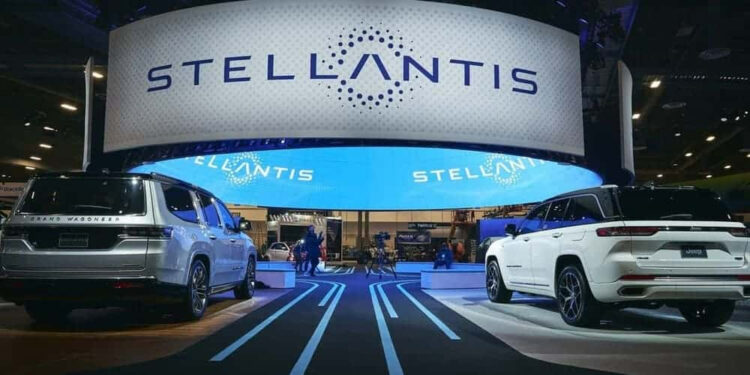
Stellantis has hit the nail on the head with its new strategy: electrification. While electric vehicles are in fashion and more and more are taking over the market, since it launched its 48-volt hybrid technology, the group of companies that make up Stellantis has seen sales skyrocket and reach the top. The key to this success? A simple system, efficiency, and affordability. Eligible for ECO labels and without the need to switch fully to a plug-in hybrid or a pure electric vehicle. But is Stellantis meeting its expectations, or is everything not as perfect as it seems? Join us in this article as we take a look at how Stellantis is experiencing this electrification process.
What is 48-volt technology?
Let’s start from scratch, this technology is a form of mild hybrid electrification, known as MHEV, and it’s basically a system that incorporates a small battery and an auxiliary electric motor that assist the combustion engine during startup and acceleration.
But Stellantis has a much more ambitious approach than other brands because they have managed to make this technology not only consume and pollute less but also travel up to 1 kilometre in 100% electric mode, so emissions would be reduced by up to 25% compared to a conventional combustion vehicle, and it costs only $2,000 more.
Problems for Stellantis
Not everything is rosy, and although Carlos Tavares, Stellantis’ CEO, boasts enormous success with implemented models from Citroën, Opel, Jeep, and Peugeot, demand and production do not match, demand is growing and production has remained quite stagnant in comparison.
The main problem is that they are taking too long to produce an essential component: the eDCT transmission, a dual-clutch automatic gearbox, electrified to work with the hybrid system of this brand.
And what happens with this?
Well, production is handled by Punch Powertrain, a joint venture of Stellantis, which operates in two plants located in France (Metz) and Mirafiori (Italy), and the latter only began assembling these transmissions last April and should already be producing over 50,000 units per month… but only reaches 18,000 units… across 11 factories!! Obviously, this slowness directly affects the brand’s delivery times.
Despite everything… On the right track
The world is crying out for a transition to eco-friendly solutions, and that is what they are working on so eagerly at Stellantis, even if in the short term it seems the move isn’t going as planned. They are showing they can reduce the environmental footprint without sacrificing accessibility or performance! And all they need is to increase production capacity for this idea to fully take off!
Is an electric vehicle worth more?
Yes, this hybridization system adds a cost of at least $2,000 on top of the vehicle price, but the figures are huge: it reduces fuel consumption and allows driving up to 1 kilometre in electric mode at low speed. Maybe it’s not very bold, but it’s a big step for users to adapt to the electrification system without having to buy a fully electric vehicle.
The industry has already seen that electric vehicles still have a bit to go before taking off, but we need steps to be taken for that to happen because the future and our planet can’t wait any longer, and any idea that mixes innovation, efficiency, and sustainability will be well received by the industry. One step closer to living in an emission-free world!