
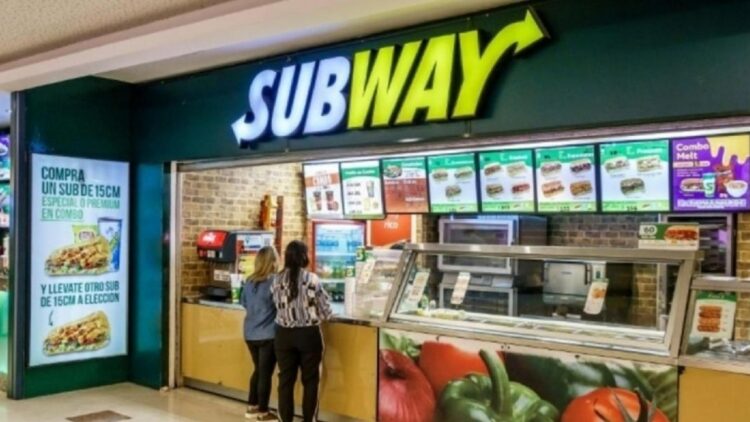
Subway, one of the largest fast food chains on the planet, has just announced news no company ever wants to share: in the United States alone, they had to shut down 630 stores. There’s not much else to say, the numbers speak for themselves. The chain is going through its worst moment in two decades, and even though it’s still operating, it’s no longer the indestructible giant it once seemed to be. While the company has tried to keep up appearances, the closures have left hundreds of workers unemployed and raised serious questions about what’s next for this sandwich giant.
In just ten years, Subway has gone from having 27,000 restaurants in the U.S. to fewer than 20,000. And although the brand still has a strong international presence, with about 37,000 locations worldwide, it’s facing a transformation phase that could mark either the start of a new era, or its definitive decline.
What happened?
The list of reasons is long and not all that surprising: plummeting sales, unprofitable locations, a franchise model that doesn’t work like it used to… Many stores simply couldn’t survive, especially in small towns or mid-sized cities where competition is fiercer than ever.
Perhaps the most painful part of this news is reading what some employees had to say. Many reported that the company gave no advance warning before closing stores.
“No heads-up, no notice, no transparency. We all found out the same day” said Joanne Kennedy, manager of a recently closed location in Oregon.
What is Subway doing to turn things around?
Despite the blow, Subway still has locations in all 50 states, with 19,502 stores currently operating. And most importantly, the company doesn’t plan to disappear. On the contrary, last November, Subway announced its “Fresh Forward 2.0” plan, a complete redesign of the customer experience, including modernized restaurants that aim to meet the expectations of today’s consumers.
A spokesperson told QSR that the brand is taking “a data-driven strategic approach” to decide where to relocate, close, or open new restaurants based on real success potential.
In addition, in 2024, Subway was acquired by Roark Capital, a private equity firm, for an impressive $9.6 billion. This deal could be the beginning of a comeback, bringing new leadership, vision, and resources to compete once again.
Where does Subway stand now?
Despite the recent closures, Subway is still one of the biggest fast food chains in the country, ahead of Starbucks with 16,935 stores and McDonald’s with 13,559.
What about its international presence?
Outside of the U.S., Subway still operates more than 10,000 restaurants and continues expanding in Europe, Asia, and Latin America.
While one chapter closes at home, abroad Subway is still seen as a modern, healthy fast food option.
A necessary adjustment or a red flag?
The honest answer is: it could go either way. It depends on whether this restructuring arrives in time. Starbucks, for example, also closed stores a few years ago to reorganize. Burger King did too. Sometimes you have to take a step back to stay alive in a market that never waits for anyone.
The problem for Subway is that they reacted too late. Now they’re racing against the clock. Either they act quickly and follow through on their restructuring, or they risk becoming just another brand we vaguely remember from the past…
Whatever it takes to bring back that Italian B.M.T. with chipotle southwest sauce… Yummy!