
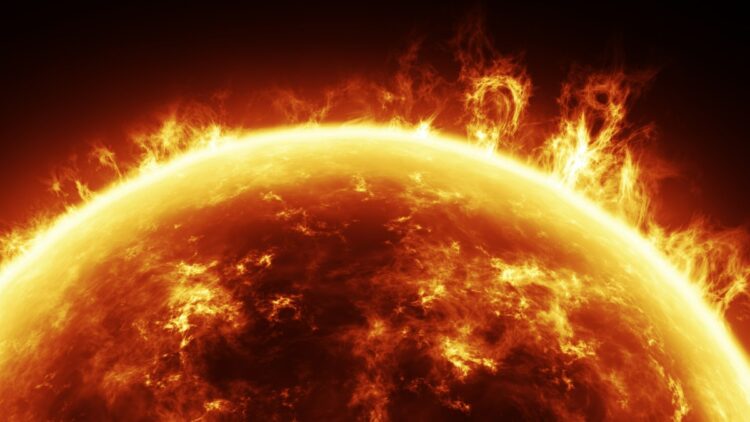
The galaxy is a box of surprises in which you never know what will happen. Now, several scientists and astronomers have discovered that the Sun has a huge hole on its surface that measures approximately 800,000 kilometres wide. It is called a “coronal hole” and it is normal for us to wonder if this type of space phenomenon can affect our planet. We are going to tell you what can happen and why it is important to keep a close eye on the sky.
What is a coronal hole?
Okay, we know that the sun is a huge ball of fire that is always releasing energy that causes wind (solar wind, yes). Normally, this wind usually goes out uniformly into space, but sometimes there are areas where the magnetic field is weaker, and when this happens, the solar wind shoots out at a much faster speed than normal, and it could affect, of course, our planet, but don’t worry! We have a super powerful atmosphere that protects us from these types of astronomical events.
What could happen to Earth with these solar winds?
Well, mainly, it could affect our telecommunications, GPS and even make the northern lights visible from places where they normally don’t appear, but as we said, don’t worry, maybe everything related to technology is going a little strange these days and the only reason is because the Sun is unruly.
What about the Northern Lights? What are they?
They are light shows that appear in the night sky, usually in areas close to the poles, Norway, Canada and Alaska (in the norht side of the Earth), it is as if the sky had natural neon lights and the sky was dyed with coloured fabrics, it usually happens when this solar wind we are talking about collides with the Earth’s magnetic field. If you have seen Brother Bear or Frozen (both from Disney) you will have seen that there is a moment “where the lights touch the ground”, and they also try to explain this phenomenon as something magical. The reality is that the energetic particles brought by the solar wind react with the gases in the atmosphere (oxide and nitrogen).
The same process happens at both poles, in the northern zone they are called “boreal” and in the southern zone they are called “austral”. But, thanks to this solar wind phenomenon, the lights can be seen in unusual places where they have never been seen before.
Everything is beautiful, but should we be worried?
No, we have an atmosphere that is like a protective shield, and it will not affect us as living beings. As we mentioned a couple of paragraphs above, astronauts on the International Space Station and satellites in orbit may be affected, but for us in our daily routine everything will be the same, and the most that will change is that we might see an aurora borealis above our heads.
Do the auroras affect our body?
No, they are natural lights in the sky and they do not have radiation nor do they represent a danger to anyone, it could just happen that they generate interaction with electronic devices, but nothing more.
Our recommendation is that, if you have the opportunity, you dedicate your next trip to observe this great spectacle that occurs in the sky, yes, wrap up warm because it is very cold at the poles, but we assure you that you will not regret it!