
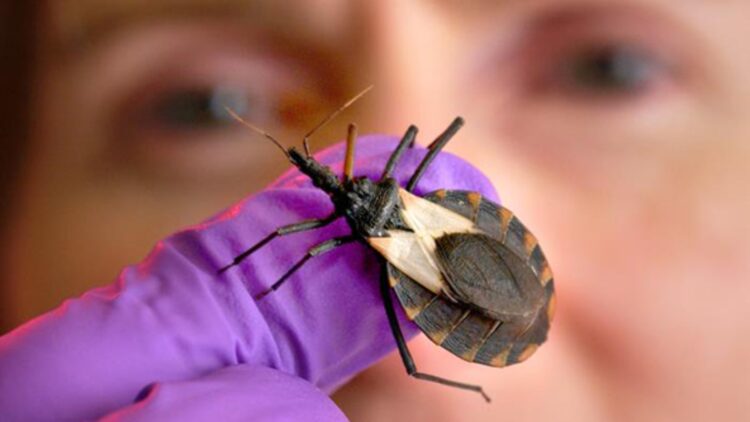
Don’t let the name of the ‘’kissing bug disease’’ fool you, because it’s very dangerous. The Chagas disease, its scientific name, is a serious infection that can damage the heart and the digestive system for years if not detected before it’s too late. The cause of this disease is the Trypanosoma cruzi parasite and it’s transmitted by the commonly known insect kissing bug.
Even though for a long time the Changa disease was considered a problem in Latin America, experts warn that this disease must already be seen as endemic in some places of the United States. This increases the importance of being aware how it can be spread, what the symptoms are and what are the treatment options available. So, let’s learn more about the Chaga disease so that we can be careful.
Information about the Chaga disease
According to the Centers for Disease Control and Prevention (CDC), the Chagas disease begins when the Trypanosoma cruzi parasite enters the human body. The main way of contagion is through the bite of the trianomine bug (or kissing bug). Let’s explain the process because is quite peculiar:
- The insect feeds on blood at night.
- Afterward, it defecates near the bite site.
- When a person scratches the bite, the feces containing the parasite can enter the skin, eyes, or mouth.
There are also other ways of contagion: from mother to child during pregnancy, via contaminated food, blood transfusions, or organ transplants.
Where can the Chagas disease be found?
Kissing bugs are in at least 32 states of the U.S., from which local cases have been documented in 8 states like: Texas (mainly), Arizona, California, Tennessee, Louisiana, Mississippi, Missouri, and Arkansas.
Experts describe the situation in the country as ‘’hypoendemic’’, meaning there’s a real presence of the Chaga disease, but less intense than in Latin America. This detail has limited surveillance, testing, and funding for the condition.
Symptoms
The Chaga infection has two stages:
- Acute phase (early infection). This stage can easily be mistaken for a stubborn flu. Symptoms include: fever, fatigue, body aches, headache, rash, vomiting, and swollen eyelid in some cases. Many people recover from these symptoms and they don’t show any immediate problems.
- Chronic phase (years later). About 20%–30% of infected individuals later develop serious complications, such as: heart rhythm problems, cardiomyopathy (weakening of the heart muscle), increased risk of stroke, and digestive tract disorders involving the esophagus or intestines.
How dangerous is Chagas?
Even though most of the infections don’t progress, when they do it can be potentially deadly. In fact, Chagas is one of the main causes of nonischemic cardiomyopathy in Latin America.
In the U.S., doctors are diagnosing more cases thanks to a higher awareness and screening efforts. However, the parasite’s capacity to remain hidden for years increases the risk of the disease going unnoticed until serious consequences show up.
Treatment
The treatment for Chagas depends a lot on the moment when the infection is detected. There are two antiparasite medicines available: benznidazol and nifurtimox.
In the acute phase, the treatment can completely eliminate the parasite if started at the right time. But, in the chronic phase, these medicines help reduce the parasite load, though their effectiveness decreases over time.
If the disease has already affected the heart or the digestive system, the person will have specific treatments for this.
Who is at risk the most?
People with more chances to be affected by Chagas are:
- Those who live or travel to the South of the U.S., where the triatomines are.
- People whose houses have cracks or are badly built.
- Outdoor workers, hunters, and campers.
- People with past exposure in Latin America.
In the U.S., blood donations have been analyzed to detect the parasite since 2007, and in many cases this is how people find out they are infected.
Prevention
The best way to defend yourself from Chagas is to reduce contact with transmitting insects. The main recommendations are:
- Sealing cracks and gaps in homes.
- Repairing or installing screens on doors and windows.
- Limiting outdoor lighting that attracts insects.
- Keeping pet sleeping areas clean.
- If you find a suspected kissing bug, avoid crushing it with bare hands; instead, capture it safely in a container for expert identification.
So, you should always be informed about any disease in your area so that you know how to prevent it.