
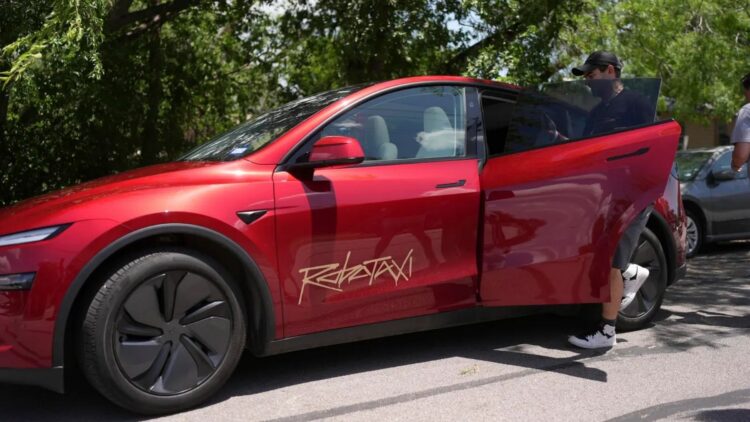
Oh oh, Tesla is once again caught up in controversy with its Robotaxi. Another accident in Austin, and this time it wasn’t so much about the crash itself but the silence that followed.
Luckily, there were no injuries. The vehicle hit an object in a parking lot and nothing more happened than a scare. But oh, Tesla, what have you done? Apparently, they tried to keep the accident secret, hiding part of the report under the excuse that it contained “confidential business information”. Oof, Tesla. More fuel for your controversies.
Tesla and transparency
Tesla is already known in the industry for hiding certain data about its autonomous driving systems…
Let’s just say that in the reports it submits to authorities, it omits when the accident occurred, what exactly happened, or what the surroundings were like, you know, little details that don’t matter much… Shady, right?
“Tesla is a unique case in the industry for its level of secrecy” published the specialized outlet Electrek, which was the first to reveal this new incident.
The company claims it does so to protect its “sensitive information” but many experts believe that argument doesn’t hold up very well because transparency, when it comes to safety, shouldn’t be optional.
A pattern
Since the Robotaxi program began, Tesla has had one accident every 62,500 miles driven. To put it in perspective, its main competitor, Waymo (from Google), reports one every 98,600 miles… and that’s without any human driver behind the wheel.
In theory, each Tesla Robotaxi has a “safety monitor” a person who can intervene if something goes wrong, and there are also remote teleoperators ready to assist in emergencies. But failures keep happening with their vehicles, and nothing seems to improve.
What’s more concerning is that Elon Musk has already announced plans to remove those supervisors before the end of the year, leaving full control to artificial intelligence… and that doesn’t sound very safe, does it?
The NHTSA investigates (again)
The rules apply to everyone, even if Tesla thinks they don’t. In the United States, if an autonomous vehicle is involved in an accident, the manufacturer has five days to report it. Tesla has missed the deadline several times, with reports arriving weeks or even months late.
That’s why the NHTSA opened a formal investigation in August for “delays and irregularities in accident reporting”. Musk defended himself by saying the errors were due to “technical problems in data collection”…
Many believe Tesla wants to protect the image of its Robotaxi program at all costs (more than the image, the magnate’s ego), and that’s why they are handling the matter so poorly.
Tesla versus its rivals
While Waymo and Cruise (from General Motors) publish detailed reports of every incident (with dates, causes, and outcomes, as they should), Tesla continues to rely on corporate silence because they prefer to control the narrative rather than guarantee a bit of transparency.
Are we moving too fast toward the future?
Tesla fans argue that accidents are inevitable with such a new technology and that failure is part of the process. Yes, it’s part of the process, no one is complaining that vehicles fail; that’s normal as we enter this new era of technology. The problem is when the cars fail and the company hides it. Without transparency, there’s no collective learning or trust, and without trust, robotaxis will continue to be seen more as a dangerous experiment than as the future of transportation.
While Musk insists that his fleet will be fully autonomous by 2026, experts are calling for more caution.
Tesla has revolutionized electric mobility, but now it needs to convince the world that its technology is safe, and to do that, it should start by not hiding things!