
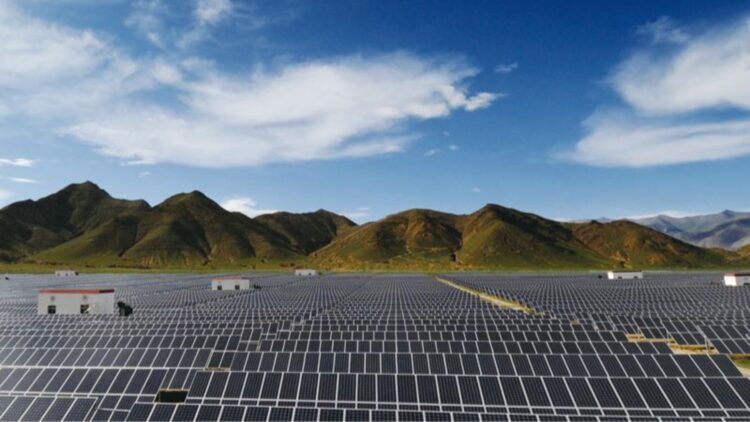
Tibet is known as ‘’the roof of the world’’ because it sits on a very high altitude. For a long time, many Tibet areas were empty and dry places where it was almost impossible to live in, or farm. However, today, we are going to explain how China decided to make the most of that very high altitude and the great amount of sunlight to build a huge solar plant–equal to the size of Chicago. This construction is changing the landscape, the nature, and people who live nearby; so let’s learn more about it.
How the huge solar plant was built
China decided to build a mega solar plant on the Tibetan Plateau because this place has unique features: very high altitude, very thin air, lots of strong sunlight, and plenty of open land. These conditions make the solar panels work perfectly because they receive sunlight with no obstacles, few clouds, and no shadow.
This project is part of a bigger plan from the country to obtain renewable energy from areas of great altitude. Even though Tibet was seen as an impossible place to build the infrastructure, today it is the home for one of the biggest and most ambitious solar projects ever.
Apart from its incredible size, the plant shows how China wants to make the most of areas that were considered useless or too difficult to use.
How this project is changing the landscape
One of the most surprising parts of the project is that the solar panels generate more than electricity; they also transform the landscape. Although it wasn’t the original aim, the structure accidentally created a new type of microclimate.
The panels act like windbreaks, reducing the strong winds that usually sweep across the area. Because of this, wind speeds have dropped by nearly 50%. The land also stays a bit more moist since the wind no longer dries it out as quickly. Dust storms have also decreased, which protects the soil.
This change has made it possible for grasses and small shrubs to grow again—plants that could barely survive there before. With a little more moisture and gentler winds, the roots can finally settle into the soil. Little by little, the dry, dusty land under and around the panels is turning into small green areas.
Animals and technology in the Tibet
A sweet and unexpected change is that, as the plants begin to grow back, local herders now let their animals wander and snack on the grass under the solar panels. The animals enjoy the shade, and the environment feels calmer. People in the area even have a friendly nickname for them — “photovoltaic sheep.”
Before, this area was unusable, but now herders have recovered the lost areas and improved their income. All of this because gentler conditions under the panels make grasses grow well enough to feed livestock.
This creates an interesting combination: above, we have the panels that generate electricity for many people; and below, we have nature returning and animals being fed.
Challenges and questions
Even though the project has been very successful, not everything is simple. Building something so big in the Tibetan Plateau–where it’s very cold, the air is thin, and location is remote–raises construction costs and makes the work more complicated.
There are more complications, for example, sending the electricity from the remote, high-altitude plateau to the cities that need it. Why is this a challenge? Well, the area is so far and elevated, therefore, it takes special equipment and careful planning to make sure the power can reach people safely.
Wait, wait, wait… this project also has some social and environmental concerns. While some areas are turning greener, some experts worry that quickly building large solar farms could disrupt the usual routes herders use or cause unexpected changes in nature.
So…
This project in Tibet shows that clean, renewable energy can work even in some of the most extreme places on Earth. It also gives us a clear example of how sustainable energy might look in the future. What do you think about this idea?